
Top Crypto Exchange Security Audit Providers: Best 10 Picks
A crypto exchange handles digital assets worth millions or even billions of dollars every day. Because of this, security is one of the most important parts of running an exchange. Even a small weakness in the code can lead to stolen funds, data leaks, or system failures.
This is where crypto exchange security audit providers help. These companies review the exchange's smart contracts, blockchain infrastructure, wallets, APIs, and overall security.
They look for bugs, vulnerabilities, and security risks before hackers can find them. Their work helps crypto exchanges protect user funds, meet security standards, and build trust with customers.
In this guide, we review the top crypto exchange security audit providers and compare the companies that are trusted by leading blockchain projects and crypto exchanges. You will learn what makes each auditor different, the services they offer, and which one may be the best choice for your security needs.
Let's dig in.
Top Crypto Exchange Security Audit Providers
Many blockchain security firms offer audit services, but only a few have built a strong reputation by securing major crypto exchanges, DeFi platforms, and Web3 projects. The providers below are known for their experienced security researchers, detailed audit reports, and proven track records.
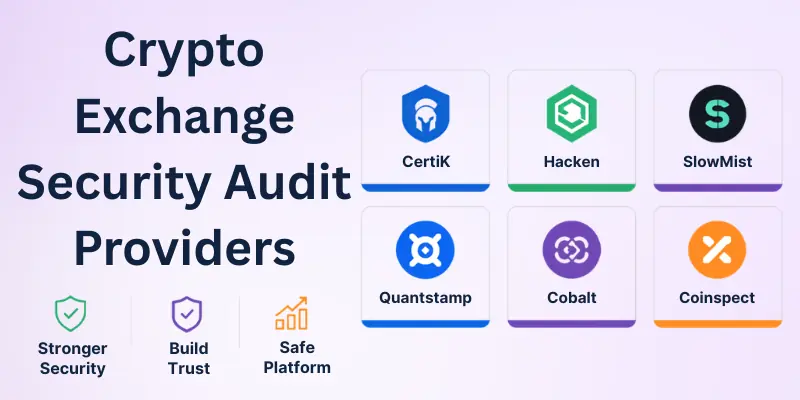
Here are the top crypto exchange security audit providers:
- Hacken
- CertiK
- Trail of Bits
- OpenZeppelin
- Quantstamp
- Halborn
- Coinspect
- Cyfrin
- ConsenSys Diligence
- PeckShield
Now, let's look at each crypto exchange security audit provider in detail.
1. Hacken
Hacken is one of the most trusted blockchain security companies in the crypto industry. It provides security audits for crypto exchanges, DeFi platforms, wallets, and blockchain applications. The company helps businesses find and fix vulnerabilities before hackers can exploit them.
Its team has completed thousands of security assessments for Web3 projects around the world.
Hacken is also known for offering penetration testing, bug bounty programs, and cybersecurity consulting in addition to smart contract audits. Many leading crypto companies rely on its reports to improve security and gain user trust. It is an excellent choice for exchanges looking for complete blockchain security services.
Key Details
- Founded: 2017
- Headquarters: Lisbon, Portugal
- Best for: Crypto exchange and Web3 security audits
- Core services: Smart contract audits, exchange security audits, penetration testing, bug bounty programs, cybersecurity consulting
- Strengths: Experienced security team, detailed audit reports, fast response to critical issues, broad Web3 expertise
- Notable exchange clients: Gate.io, KuCoin, WhiteBIT
- Typical turnaround: 1–4 weeks, depending on the project size
- Cost range: Medium to high (based on project scope)
- Formal verification: Available for selected high-risk projects
2. CertiK
CertiK is one of the world's largest blockchain security firms and is trusted by many leading crypto projects. It helps crypto exchanges, DeFi platforms, and blockchain networks identify security risks before they become serious problems. The company combines automated security tools with manual code reviews to deliver detailed audit reports.
Besides security audits, CertiK also offers continuous monitoring to detect threats after a project goes live. Its public audit reports have made it one of the most recognized names in blockchain security.
Many startups and enterprise blockchain companies choose CertiK because of its strong reputation and wide range of security services. It is a great option for exchanges that want both one-time audits and ongoing protection.
Key Details
- Founded: 2018
- Headquarters: New York, United States
- Best for: Large crypto exchanges and enterprise blockchain projects
- Core services: Smart contract audits, exchange security audits, blockchain audits, penetration testing, continuous security monitoring
- Strengths: Large security team, AI-powered monitoring, detailed public audit reports, global reputation
- Notable exchange clients: OKX ecosystem, Binance ecosystem projects, PancakeSwap
- Typical turnaround: 2–6 weeks, depending on the audit scope
- Cost range: Medium to high
- Formal verification: Available for critical smart contracts
3. Trail of Bits
Trail of Bits is a well-known cybersecurity company that specializes in advanced blockchain security audits. It works with crypto exchanges, blockchain protocols, and large technology companies to identify complex security vulnerabilities.
The company is respected for its deep technical expertise and thorough code reviews. Its auditors focus on finding issues that automated tools often miss. Trail of Bits has helped secure many high-value blockchain projects and open-source technologies.
Businesses choose this company when they need a detailed and highly technical security assessment. It is best suited for large exchanges and enterprise blockchain platforms.
Key Details
- Founded: 2012
- Headquarters: New York, United States
- Best for: Enterprise blockchain security audits
- Core services: Smart contract audits, blockchain security reviews, penetration testing, protocol analysis
- Strengths: Deep technical expertise, detailed manual audits, strong research team
- Notable exchange clients: Coinbase, Uniswap ecosystem, several enterprise blockchain projects
- Typical turnaround: 2–6 weeks
- Cost range: High
- Formal verification: Available
4. OpenZeppelin
OpenZeppelin is one of the most trusted names in Ethereum and smart contract security. It is widely known for its secure open-source libraries and professional audit services.
The company helps crypto exchanges and Web3 projects protect their smart contracts and blockchain applications from security risks. Its experienced auditors review code carefully and provide practical recommendations to improve security.
OpenZeppelin has worked with many leading blockchain projects and continues to play a major role in improving Web3 security standards. It is an excellent choice for projects built on Ethereum and other EVM-compatible blockchains.
Key Details
- Founded: 2015
- Headquarters: United States
- Best for: Ethereum and EVM-based projects
- Core services: Smart contract audits, blockchain security consulting, secure development support
- Strengths: Ethereum expertise, trusted open-source libraries, experienced audit team
- Notable exchange clients: Coinbase, The Graph, Compound
- Typical turnaround: 2–5 weeks
- Cost range: Medium to high
- Formal verification: Available

5. Quantstamp
Quantstamp is a leading blockchain security company that provides audits for crypto exchanges, DeFi platforms, and blockchain protocols. It has secured billions of dollars in digital assets through its audit services.
The company combines automated security tools with manual code reviews to detect vulnerabilities before deployment. Its auditors have experience working with both startups and large blockchain organizations.
Quantstamp is trusted for delivering clear audit reports and helping projects improve their overall security. It is a reliable option for businesses looking for experienced blockchain security professionals and scalable audit solutions.
Key Details
- Founded: 2017
- Headquarters: California, United States
- Best for: Smart contract and blockchain protocol audits
- Core services: Smart contract audits, protocol audits, security consulting, automated security analysis
- Strengths: Strong audit experience, automated testing tools, trusted by major Web3 projects
- Notable exchange clients: Binance Smart Chain ecosystem, MakerDAO, Curve Finance
- Typical turnaround: 2–5 weeks
- Cost range: Medium to high
- Formal verification: Available where needed
6. Halborn
Halborn is a cybersecurity company that focuses on blockchain, crypto, and digital asset security. It helps crypto exchanges protect their infrastructure, wallets, APIs, and smart contracts from cyber threats.
The company is known for its hands-on security testing and experienced ethical hackers. In addition to code audits, Halborn offers penetration testing, compliance assessments, and incident response services.
Many well-known crypto businesses rely on Halborn to strengthen their overall security. Its broad cybersecurity expertise makes it a strong choice for exchanges that need more than just a smart contract audit. It is ideal for businesses looking for complete security protection.
Key Details
- Founded: 2019
- Headquarters: Miami, Florida, United States
- Best for: End-to-end crypto exchange security
- Core services: Smart contract audits, penetration testing, wallet security, infrastructure assessments
- Strengths: Strong cybersecurity team, exchange security expertise, incident response
- Notable exchange clients: Coinbase, Ava Labs, Solana ecosystem projects
- Typical turnaround: 2–5 weeks
- Cost range: Medium to high
- Formal verification: Available for selected projects

7. Coinspect
Coinspect is a blockchain security company that has been auditing crypto projects for many years. It provides security reviews for crypto exchanges, wallets, blockchain protocols, and smart contracts.
The company follows a manual auditing approach to identify vulnerabilities that could affect user funds or platform security. Its reports are detailed, practical, and easy for development teams to understand. Coinspect has worked with both established exchanges and new blockchain startups.
Businesses choose it because of its consistent audit quality and experienced security researchers. It is a reliable option for projects that want independent blockchain security reviews.
Key Details
- Founded: 2014
- Headquarters: Hungary
- Best for: Independent blockchain security audits
- Core services: Smart contract audits, exchange security reviews, wallet security testing
- Strengths: Manual code reviews, experienced auditors, detailed reports
- Notable exchange clients: Bitstamp, Trezor, Cardano ecosystem projects
- Typical turnaround: 2–4 weeks
- Cost range: Medium
- Formal verification: Available when required
8. Cyfrin
Cyfrin is a fast-growing blockchain security company that specializes in smart contract audits and secure blockchain development. It has built a strong reputation through its experienced auditors, developer education, and open-source security resources.
The company works with DeFi platforms, blockchain startups, and crypto businesses to identify vulnerabilities before launch. Cyfrin also helps developers follow secure coding practices to reduce future risks.
If you are new to blockchain security, learning the basics through a Quantum Blockchain 101 guide can help you understand why professional audits from firms like Cyfrin are important. It is a great choice for teams that want both security expertise and developer-focused guidance.
Key Details
- Founded: 2023
- Headquarters: United States
- Best for: Smart contract security and developer support
- Core services: Smart contract audits, security consulting, code reviews, developer training
- Strengths: Experienced auditors, educational resources, fast-growing reputation
- Notable exchange clients: Works primarily with DeFi and Web3 projects
- Typical turnaround: 1–3 weeks
- Cost range: Medium
- Formal verification: Available for selected engagements
9. ConsenSys Diligence
ConsenSys Diligence is the security division of ConsenSys and is widely respected for protecting Ethereum-based projects. It provides smart contract audits, threat modeling, and security testing for crypto exchanges and blockchain applications.
The company follows a detailed review process to identify vulnerabilities before products go live. It also helps businesses improve transparency through security best practices, including support for proof-of-reserves audits where suitable. Its experienced researchers have worked on many leading Ethereum projects over the years.
ConsenSys Diligence is an excellent choice for exchanges and Web3 businesses that want high-quality Ethereum security audits.
Key Details
- Founded: 2018
- Headquarters: United States
- Best for: Ethereum security audits
- Core services: Smart contract audits, threat modeling, security consulting, protocol reviews
- Strengths: Deep Ethereum expertise, trusted researchers, detailed audit reports
- Notable exchange clients: MetaMask ecosystem, Linea ecosystem, major Ethereum projects
- Typical turnaround: 2–5 weeks
- Cost range: High
- Formal verification: Available
10. PeckShield
PeckShield is one of the leading blockchain security firms known for its audit services and real-time threat monitoring. It helps crypto exchanges, blockchain networks, and DeFi platforms improve their security before and after launch.
The company is also recognized for tracking blockchain exploits and quickly reporting major crypto security incidents. Its experienced team performs detailed smart contract reviews and infrastructure assessments to reduce security risks.
Many blockchain businesses trust PeckShield because of its technical expertise and active role in the crypto security community. It is a strong option for exchanges that want both professional audits and ongoing security monitoring.
Key Details
- Founded: 2018
- Headquarters: Singapore
- Best for: Security audits and blockchain threat monitoring
- Core services: Smart contract audits, exchange security audits, threat intelligence, blockchain monitoring
- Strengths: Fast vulnerability detection, active security research, strong industry reputation
- Notable exchange clients: Bybit, Bitget, numerous DeFi protocols
- Typical turnaround: 2–4 weeks
- Cost range: Medium to high
- Formal verification: Available
- ✔ Be Respectful
- ✔ Stay Relevant
- ✔ Stay Positive
- ✔ True Feedback
- ✔ Encourage Discussion
- ❌ Avoid Spamming
- ❌ No Fake News
- ❌ Don't Copy-Paste
- ❌ No Personal Attacks