
Pros and Cons of Virtual Reality - VR Benefits & Drawbacks
Virtual reality (VR) is changing many industries, including gaming, education, healthcare, and business. The global VR market is expected to reach $62.1 billion by 2027, showing its growing importance.
VR offers great benefits, such as realistic experiences and better training. However, it also has some downsides, like high costs and health issues.
So, in this article, we will look at the advantages and disadvantages of virtual reality to help you understand its full potential.
Advantages of Virtual Reality
In this part, we will examine the numerous advantages of virtual reality (VR) in depth.
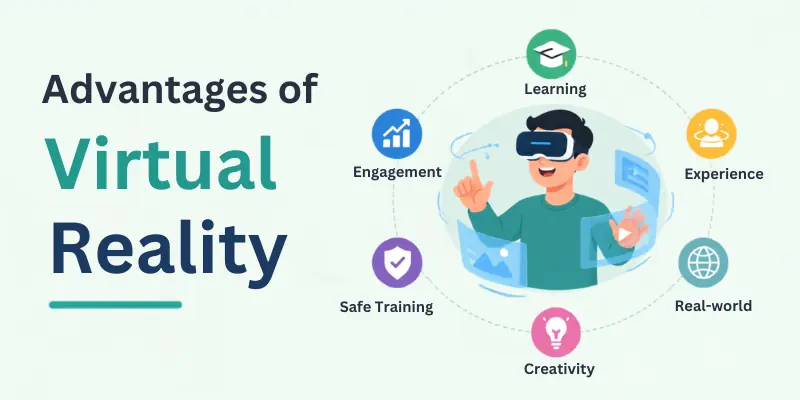
Below is a comprehensive list of the benefits we will explore in depth:
- Realistic Experiences
- Better Learning
- Safe Training
- Improved Entertainment
- Remote Travel
- Boosts Creativity
- Therapy & Treatment
- Team Collaboration
- Enhanced Shopping
- Fitness & Exercise
Let’s examine them.
1. Realistic Experiences
Virtual reality gives us a chance to experience things that feel like the real world. When we use VR, we can step into another place and interact with it. It’s great for gaming or learning new skills. I recommend VR if you want an experience that feels realistic and exciting.
- Users can interact with 3D environments as if they were real
- VR makes storytelling and gaming more immersive
- It enhances simulations for training and education
2. Better Learning
Virtual reality turns learning into a hands-on experience. We can touch and explore things instead of just reading about them. It makes complex subjects easier to understand. I suggest using VR for studying to make learning more engaging and fun.
- Students can explore historical events or scientific concepts in 3D
- Complex skills, like surgery, can be practiced safely
- Learning becomes interactive and memorable
3. Safe Training
With VR, we can practice difficult tasks without the risk of danger. It lets professionals train in a controlled environment before facing real challenges. Whether it’s flying a plane or handling machinery, VR keeps us safe.
- Simulates risky situations like flying a plane or handling machinery
- Reduces training costs by eliminating physical risks
- Builds confidence by allowing repeated practice
4. Improved Entertainment
Virtual reality takes entertainment to the next level. Instead of just watching, we can actually be a part of the action. From games to concerts, VR brings a new level of excitement. Try VR if you want to enjoy entertainment in a new way.
- Gamers can fully immerse themselves in 3D worlds
- VR concerts and events offer unique experiences
- Interactive storytelling makes movies more engaging
5. Remote Travel
With VR, we can visit places around the world without leaving home. It lets us explore different countries and famous landmarks virtually. Whether it’s a remote island or a busy city, VR brings the world to us. Anyone who loves to explore but can’t go far must try VR.
- Experience different countries or cities virtually
- Explore places that may be hard to visit physically
- Perfect for those who love travel but can’t go far
6. Boosts Creativity
Virtual reality can help us unlock our creativity in new ways. By experimenting in virtual environments, we can think outside the box. Whether you’re designing, painting, or brainstorming, VR makes creativity more interactive.
- Virtual spaces offer endless possibilities for creative projects
- Artists can create 3D artwork and interactive designs
- VR encourages innovative ideas and fresh perspectives
7. Therapy & Treatment
Virtual reality is being used to help treat various mental health issues. It allows patients to face their fears or practice coping techniques in a controlled, safe environment. I recommend VR therapy for anyone seeking a modern, safe way to improve mental well-being.
- Helps in exposure therapy for phobias and PTSD
- Assists in physical rehabilitation with virtual exercises
- Reduces stress and anxiety by offering relaxing virtual experiences

8. Team Collaboration
With VR, teams can collaborate easily, no matter where they are. It helps bring people together in a virtual space, where they can work, discuss ideas, and solve problems. Any team looking to enhance their communication and collaboration skills can use it.
- Teams can meet and work in virtual environments
- It’s easier to share ideas and solve problems remotely
- VR boosts productivity by making remote work more engaging
9. Enhanced Shopping
Shopping in virtual reality offers a more interactive and fun experience. You can browse products as if you were actually in the store. UseVR for shopping if you want a more realistic and enjoyable experience.
- Virtual shopping allows users to try out products in 3D
- You can explore different stores and product options without leaving home
- VR creates a personalized shopping experience tailored to your tastes
10. Fitness & Exercise
VR is a fun way to get active while staying indoors. You can work out and play games at the same time, making exercise more enjoyable. Using VR for fitness if you’re looking for an exciting way to stay healthy and fit.
- VR workouts are engaging and fun
- Helps with cardio, strength training, and balance exercises
- It tracks your progress and offers a variety of workouts

Disadvantages of Virtual Reality
Below is a comprehensive list outlining the various drawbacks associated with virtual reality (VR):
- Expensive
- Health Issues
- Addiction Risk
- Limited Real Interaction
- Hardware Limitations
- Lack of Real-world Experience
- Privacy Concerns
- Technical Issues
- Space Requirements
- Not for Everyone
Let’s take a closer look at each of them.
1. Expensive
Virtual reality can be quite costly. From the VR headsets to the necessary equipment, the price can add up quickly. This makes it harder for everyone to enjoy VR. Consider the costs carefully before diving into VR to make sure it fits your budget.
- High-quality VR headsets and equipment are expensive
- Additional costs may arise from needed upgrades and accessories
- Not everyone can afford the initial setup cost
2. Health Issues
Spending too much time in VR can affect your health. Some people experience motion sickness or eye strain after using VR for a while. I recommend taking breaks and limiting your VR use to avoid these issues.
- Prolonged use can cause eye strain and headaches
- Motion sickness may occur, especially in fast-moving VR games
- VR can lead to dizziness or discomfort for some users
3. Addiction Risk
Just like with video games, VR can be addictive. People may find themselves spending too much time in virtual worlds and neglecting real-life responsibilities. So, keep track of your VR time to avoid this problem.
- Extended use can lead to neglecting work, school, or relationships
- Spending too much time in VR can impact daily life and routines
- It may be hard to disconnect once immersed in VR
4. Limited Real Interaction
While VR feels real, it’s still not the same as interacting with people face-to-face. It lacks the nuances of real-life conversations, like body language and tone. Kindly balance VR with in-person interactions for a more genuine social experience.
- Virtual interactions can feel distant or less personal
- You miss out on real-world cues, like body language and facial expressions
- It can lead to feelings of isolation if used excessively
5. Hardware Limitations
Not all VR equipment is the same, and some have more restrictions than others. Using low-quality headsets can make your experience less enjoyable. Please buy good-quality hardware for a better VR experience.
- Low-end VR headsets may offer lower resolution or slower response times
- The hardware may not be compatible with all devices
- Expensive setups might be required for a smooth experience
6. Lack of Real-world Experience
VR is engaging, but it can't fully match real-life experiences. It might overlook some key senses, such as taste, touch, and smell. I suggest using VR for virtual experiences while also enjoying the real world.
- VR cannot replace the richness of real-world environments
- Some senses, like touch and smell, are not yet fully developed in VR
- Real-life experiences remain more detailed and complex
7. Privacy Concerns
Using VR can lead to privacy concerns. Your personal information, like where you go and what you like, may be collected. I suggest checking the privacy policies of VR platforms before using them.
- VR platforms may collect personal information without clear consent
- Your actions and preferences within VR could be tracked and sold
- Privacy risks may arise if the VR device is not properly secured
8. Technical Issues
VR experiences can sometimes be affected by technical problems. Connection issues, glitches, and crashes can break the experience.
Make sure to fix any problems and keep your device updated to reduce these issues.
- Poor connectivity can disrupt the VR experience
- Glitches and software errors can cause frustration
- VR systems may require frequent updates to function correctly.
9. Space Requirements
Using VR requires a lot of physical space. If you don’t have enough room, it can be difficult to move freely or avoid obstacles. So guys, make sure you have enough space before setting up your VR system.
- Small spaces can make it hard to move around safely
- You might need to rearrange furniture to make space for VR activities
- Limited space can restrict the full VR experience
10. Not for Everyone
VR is not suitable for everyone. Some people may not enjoy the experience or may even feel uncomfortable using it. Try VR before fully committing to make sure it’s the right fit for you.
- Some users may experience discomfort or motion sickness
- Not all individuals find VR enjoyable or engaging
- It may not appeal to people who prefer traditional methods of entertainment
Conclusion
So, guys, it’s time to wrap up. In this article, we’ve explored the pros and cons of virtual reality.
Honestly, VR is such an exciting technology! It makes gaming, learning, and even exploring virtual worlds feel so real. But let’s not ignore the downsides—like how costly the devices are or the potential health concerns.
From my point of view, VR is worth trying if you want to add something unique to your life, but balance is key. If you’ve ever wondered what it feels like to step into a virtual world, now’s the time to give it a shot and see how amazing it can be!
FAQs
Below, you’ll find frequently asked questions about “Advantages and Disadvantages of VR”:
Virtual Reality (VR) is a technology that creates a computer-generated 3D environment. Users wear special headsets to feel like they are inside a digital world. It is used for gaming, training, education, and more.
VR provides an immersive and interactive experience. It is useful for education, training, and medical simulations. It also enhances gaming and entertainment by making them more realistic.
VR can be expensive because of the high cost of headsets and equipment. Some users experience motion sickness or eye strain. It also reduces real-world interactions, making people more isolated.
Yes, VR helps students and professionals learn through simulations. It is used in medical training, flight simulations, and virtual classrooms. This makes learning more engaging and hands-on.
Using VR for long periods can cause eye strain, headaches, and dizziness. Some users also feel motion sickness due to the virtual movement. It’s important to take breaks and use VR in moderation.
- ✔ Be Respectful
- ✔ Stay Relevant
- ✔ Stay Positive
- ✔ True Feedback
- ✔ Encourage Discussion
- ❌ Avoid Spamming
- ❌ No Fake News
- ❌ Don't Copy-Paste
- ❌ No Personal Attacks