
Learn Organic & Artificial Ways to Boost Your Site’s DA
Domain authority (DA) is a key metric by Moz that indicates how well a website is positioned to rank on search engine result pages. Increasing the DA of your site positively impacts its ranking and visibility.
But here comes a question: “How to Increase DA of Your Website?” Should we buy services that people offer on various freelancing platforms, promising to increase the DA in a few days!?
Exactly not! They use black hat SEO tactics to boost a website's authority in a few days, which can negatively impact your website and cause a permanent loss.
Guys, worry not. In this guide, I’ll share with you the organic and artificial ways to increase the domain authority of your site naturally and effectively.
So, guys, let's confidently dive in!
Organic Ways to Increase Domain Authority
In this section, I will share the natural ways to enhance the DA score of your website. These strategies are ethical, long-lasting, and aimed at growth over the long term.
- Build High-Quality Backlinks
- Create High-Quality, Relevant Content
- Optimize On-Page SEO
- Improve Site Performance
- Build a Strong Internal Linking Structure
- Enhance Social Signals
- Maintain a Clean Backlink Profile
Let me guide you about each technique in detail.
1. Build High-Quality Backlinks
Getting backlinks from other websites is like getting votes of trust. Search engines know that your website is trustworthy and valuable when a well-known site links to your content.
- Guest Blogging: Write helpful articles for popular websites in your niche. Add a link to your best content so readers can explore your site.
- Outreach Campaigns: Contact bloggers or site owners in your field and suggest collaborations that benefit both sides.
- Use Directories: Submit your site to trusted directories like local business listings or niche-specific platforms. Make sure the directories are reputable to avoid any harm to your DA.
- Fix Broken Links: Find links on high-DA websites that no longer work. Offer your content as a replacement, helping them and building your backlinks.
How This Helps DA: Search engines see that your website is trustworthy because it has high-quality backlinks. This makes your domain authority go up over time.
2. Create High-Quality, Relevant Content
The best way for your website to grow is to have good content.
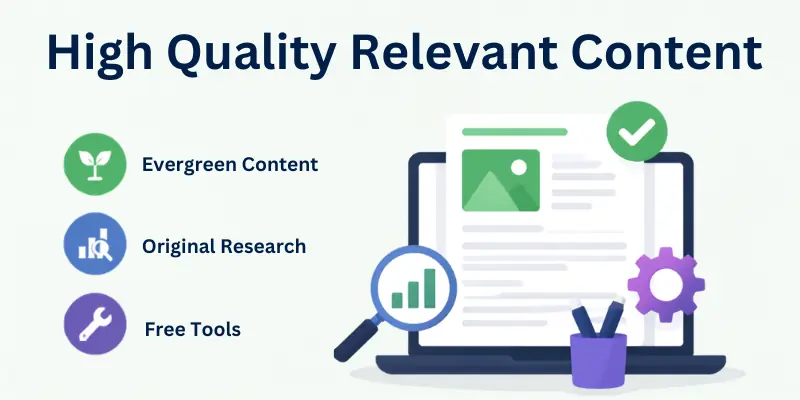
People will share and link to your content if it is interesting and useful.
- Evergreen Content: Write articles that remain useful for years. These pieces attract continuous traffic and backlinks.
- Original Research: Create reports, surveys, or case studies that provide unique data for your niche. Websites love linking to content that offers fresh updates.
- Free Tools: Add niche-specific tools or different tools to your site—people like using these tools and giving recommendations in the form of backlinks.
How This Helps DA: Your site becomes a go-to resource when it has high-value content. This increases backlinks and engagement, which directly raises your DA.
3. Optimize On-Page SEO
Search engines need to understand your site to rank it well. Through on-page SEO, you can make sure that your site is search engine and user friendly.
- Write Strong Meta Tags: Add clear, catchy titles and descriptions to every page so it may look well optimized. Add keywords in the metadata, too.
- Smart Keyword Use: Do some research to find what your audience searches for. Use these keywords in your headings and throughout your content.
- Optimize Images: Add descriptive alt text for your images and compress them to improve your site’s speed.
How This Helps DA: Making your website more accessible and understandable to search engines increases your chances of ranking higher, which boosts your domain authority.
4. Improve Site Performance
No one likes a slow or complicated website. A fast, secure, and mobile-friendly website attracts visitors to stay longer and builds trust with search engines.
- Speed Up Your Site: Use tools to compress images and enable caching. Visitors will stay on fast-loading sites.
- Make It Mobile-Friendly: Your site must look great on tablets and phones. Today, most people browse on their phones.
- Add an SSL Certificate: A secure website with HTTPS is a green signal in terms of security.
- Focus on User Experience: Check metrics like how quickly your content loads and how smoothly users can interact with it.
How This Helps DA: A fast and user-friendly site keeps users engaged, improves rankings, and adds to your website’s authority.
5. Build a Strong Internal Linking Structure
Internal links connect your content and guide both visitors and search engines through your site. A well-organized structure makes it easy to find your best content.
- Use Clear Anchor Texts: Instead of vague links like "click here," use descriptive text like "read our on-page SEO tips" to guide users.
- Highlight Important Pages: Link often to your key pages, such as your most informative blog posts or main services.
- Group Content by Topic: Create clusters of related content to improve navigation and SEO. For example, group all your SEO-related guides together.
How This Helps DA: Internal links spread authority across your site. This improves the user experience and helps search engines crawl your pages better.
6. Enhance Social Signals
While social media doesn’t directly impact DA, it plays a huge role in making your content more visible and shareable, which leads to more backlinks.
- Share Content Regularly: Post updates about your new blog posts or resources on platforms like Facebook, LinkedIn, Twitter, and more.
- Engage with Your Audience: Respond to comments, answer questions, and build a connection with your followers.
- Work with Influencers: Partner with niche influencers who can share your content with their followers, expanding your site’s reach.
How This Helps DA: If people share your content on social networks, you can get more backlinks and traffic, increasing your authority.

7. Maintain a Clean Backlink Profile
Not all backlinks are good for your site. Some low-quality links can harm your reputation, so keeping a clean profile is important.
- Remove Bad Links: Use tools like Google’s Disavow Tool to get rid of links from spammy websites.
- Audit Regularly: Monitor who links to you. Tools like Ahrefs or Moz help you identify and remove harmful links.
- Keep Anchor Texts Natural: Avoid over-optimized text in your backlinks. Use a mix of branded and generic anchor text to keep it natural.
How This Helps DA: A healthy backlink profile ensures search engines trust your website, allowing your DA to grow gradually.
Artificial Ways to Increase Domain Authority
Natural methods are always better for long-term growth, but some use artificial methods to raise domain authority. These methods may work quickly, but they often come with risks.
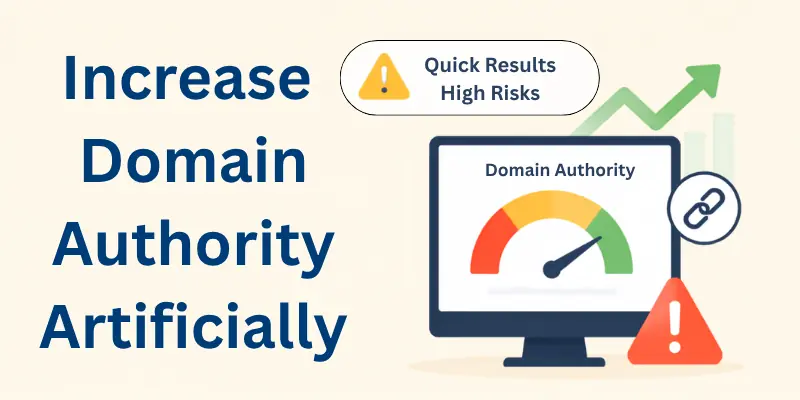
Let's examine these methods and discuss their pros, cons, and risks.
1. Buying Backlinks
When you buy backlinks, you pay other websites to link to yours. This can help your DA rise quickly, but it is against Google's rules.
- How It Works: You pay high-DA websites to place your link on their pages, making it seem like your site is trustworthy.
- Pros: You might see an immediate improvement in your DA and rankings.
- Cons: Search engines like Google are very strict about paid links. If they detect them, your site may face penalties.
Why It’s Risky: Paid backlinks aren't earned naturally, so they don't show authority or trust. Google's algorithms can spot these tricks, and the punishments may be worse than the benefits.
2. Using Private Blog Networks (PBNs)
PBNs, or private blog networks, are groups of websites that are just made to link back to your main site. They are meant to raise your DA by making it look like you have a lot of strong backlinks.
- How It Works: You build or buy a network of websites that only link to yours. This gives your site an appearance of authority.
- Benefits: This method helps you build backlinks quickly and can temporarily improve your rankings.
- Risks: If search engines detect your PBN, they can de-index the entire network and penalize your main site.
Why It’s Risky: PBNs are hard to maintain because they require constant updates and look unnatural to search engines. They’re also expensive and can damage your site’s reputation for a long time.
3. Automated Link Building Tools
Automated tools promise to create backlinks in bulk, saving time and effort. But, these tools produce low-quality links that can do more harm than good.
- How It Works: Software like GSA Search Engine Ranker automatically creates thousands of backlinks by submitting your site to directories, forums, or blogs.
- Pros: Saves time and effort by generating backlinks in bulk.
- Cons: Most of the backlinks are from low-quality or spammy websites, which can hurt your DA rather than improve it.
Why It’s Risky: Search engines value quality over quantity. Automated links often result in over-optimization, which can trigger penalties or a drop in permanent rankings.

4. Paid Content Promotion
With paid content promotion, you pay to get people to see your content, which can result in backlinks. Even though it's not completely natural, it's considered safer than other artificial methods.
- How It Works: You pay influencers, bloggers, or platforms to share your content with their audience, increasing the chances of getting backlinks.
Examples of Paid Strategies:
- Influencer Collaborations: Partner with niche influencers to promote your articles, guides, or resources.
- Sponsored Posts: Publish your content on high-traffic blogs or news websites in exchange for a fee.
Why It’s Less Risky: Paid promotion focuses on visibility and audience engagement, which can result in genuine backlinks. However, caution is still required to avoid over-promotion or targeting irrelevant audiences.
5. Domain Authority Manipulation Techniques
Some people manipulate DA scores directly using technical methods. These techniques may bring temporary success, but they are rarely sustainable in the long run.
Common Techniques:
- 301 Redirects: Redirecting old, high-DA domains to your site can temporarily transfer their authority to you.
- Link Wheels: Creating a network of interconnected websites that link back to your domain, boosting DA artificially.
Risks: These techniques often violate search engine guidelines. If detected, your website may lose rankings, face penalties, or have its DA drop sharply.
Red Flags to Avoid When Trying to Improve DA
While increasing Domain Authority (DA) is important, there are certain practices you must avoid to protect your site’s reputation and rankings:
- Buying Low-Quality Backlinks: Paying for spammy or irrelevant website backlinks might temporarily boost your DA, but search engines like Google could penalize your site in the long run. Always focus on quality over quantity.
- Over-Optimizing Anchor Texts: Using exact-match keywords repeatedly as anchor text can make your links look unnatural. Search engines might flag this as an attempt to manipulate rankings.
- Submitting to Low-Quality Directories: Not all directories are created equal. Submitting your site to irrelevant or spammy directories can harm your DA instead of helping it. Choose niche-relevant and reputable directories only.
- Overusing Automated Tools: Tools that create backlinks at scale often generate low-quality links. These shortcuts may lead to search engine penalties, harming your site’s long-term growth.
- Ignoring Spammy Backlinks: Neglecting to monitor and clean your backlink profile can result in toxic links damaging your DA. Regularly audit your links using tools like Ahrefs or Moz to disavow harmful ones.
- Focusing Only on DA While Ignoring Content Quality: A high DA is pointless if your site lacks engaging, valuable content. Search engines prioritize user experience over artificial metrics.
Does Domain Authority Guarantee Success?
Domain Authority is an essential metric but doesn’t guarantee your website’s success. Here’s why:
- DA is Just One Metric: While DA reflects your site’s credibility, search engines use hundreds of other factors to rank websites, such as relevance, content quality, and user experience.
- Content Relevance Matters More: A site with a lower DA but highly relevant and optimized content can still outrank a high-DA site if it meets the user’s intent better.
- User Experience Plays a Key Role: A fast-loading, mobile-friendly website with excellent navigation can perform better than one with a high DA but poor usability.
- Competitor Dynamics: Your DA score might be decent, but if your competitors improve theirs faster, it could impact your visibility in search results.
- Search Engine Algorithms Keep Changing: DA alone will not protect you from algorithm updates. A balanced SEO strategy that includes great content and technical optimization is key to long-term success.
Tip: Treat DA as a guide, not an ultimate goal. Instead of obsessing over the number, focus on creating value for your audience. A higher DA will naturally follow!
Conclusion
In this article, we’ve covered how to increase DA (domain authority) in detail.
While all the steps are important, I recommend prioritizing regular technical audits to keep your website healthy and ready for growth. It takes time to build domain authority, so be consistent and keep getting better.
If this guide helped you, comment below or share your success story, we’d love to celebrate with you!
FAQs
Here are some of the most frequently asked questions related to DA boosting:
It takes time and consistent effort to raise your DA. It can take a few months to see results from natural methods like backlinks and good content. Well, artificial methods might work faster than organic ones.
New websites usually start with a low DA. Building quality content and backlinks over time helps improve the score. Patience and consistent effort are key.
Your DA can go down if you lose backlinks, if your competitors get better scores, or if Moz changes its algorithm. To get it back, keep an eye on your backlinks and keep making good content.
Once a month, you can look at your DA score to see how things are going. You don't need to check often because changes take time to show up. For keeping an eye on things, use tools like Moz, Ahrefs, or SEMrush.
Actually, DA is just one way to measure how well your site is doing. Its better to focus on providing value to your audience, improving SEO, and generating organic traffic. A balanced approach ensures long-term success.
- ✔ Be Respectful
- ✔ Stay Relevant
- ✔ Stay Positive
- ✔ True Feedback
- ✔ Encourage Discussion
- ❌ Avoid Spamming
- ❌ No Fake News
- ❌ Don't Copy-Paste
- ❌ No Personal Attacks