
Telecom Cost Optimization: Save More Every Month
The telecommunications sector is developing rapidly, and the demand for modern digital services requires operators to make continuous investments in infrastructure. However, building and upgrading networks involves significant costs, which makes precise planning and rational resource management essential.
In this context, telecommunications network planning is gaining importance, as it enables efficient investment management and minimizes financial risk.
Why Does Network Planning Affect Costs?
Telecom investments cover a wide range of activities – from expanding fiber infrastructure and upgrading base stations to deploying 5G technology. Each of these projects requires careful telecommunications network planning, as poorly thought-out decisions can generate unnecessary expenses.The most common sources of excessive costs include:
- Lack of demand analysis in a specific region,
- Duplication of resources and overly dense networks,
- Underestimating future traffic loads,
- Frequent upgrades caused by inaccurate forecasts.
Precise telecommunications network planning helps avoid these mistakes and ensures better use of available resources.
Role of Telecommunications Network Planning in Operator Strategy
Network planning is not only about technical decisions but also a part of business strategy. It involves forecasting demand for services, analyzing potential revenues, and defining investment schedules.
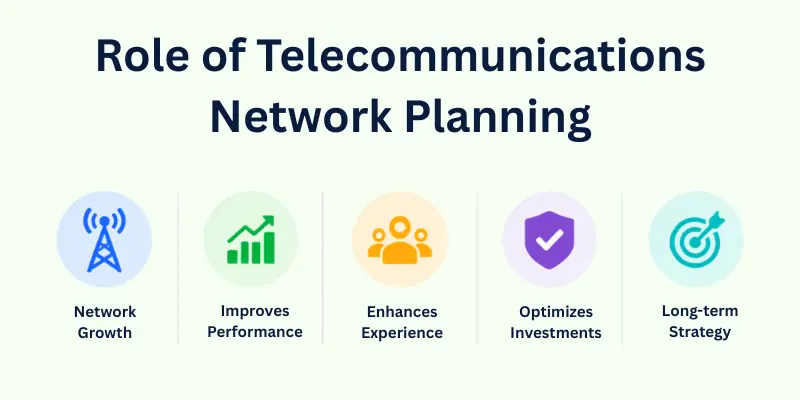
By implementing appropriate tools, operators can:
- Better predict network traffic growth,
- Adjust investment scale to actual needs,
- Reduce spending on inefficient projects,
- Shorten the time to market for new services,
- Minimize infrastructure maintenance costs.
This approach makes investments more predictable and sustainable.
Technologies Supporting Network Planning
Modern telecommunications network planning relies on advanced analytical tools and simulation systems. These enable operators to create network development scenarios and assess their profitability.
The most common solutions include:
- GIS systems for geographic analysis,
- Tools for traffic and capacity modeling,
- AI algorithms predicting demand,
- Platforms that integrate data from multiple sources.
Such technologies allow operators to make data-driven decisions instead of relying on estimates, significantly reducing the risk of poor investments.
Cost Optimization Through a Phased Approach
Large-scale telecom projects require substantial financial resources. One of the most effective ways to reduce costs is adopting a phased approach to investments.
Cycle-based planning makes it possible to:
- Start with areas offering the highest potential
- Gradually expand infrastructure coverage
- Continuously adjust strategies based on results
- Avoid overloading budgets.
This approach allows operators to adapt their actions flexibly to changing market conditions.

Impact of Network Planning on Customer Experience
Savings achieved through rational investments benefit not only the financial stability of operators but also the quality of services delivered to customers. A well-designed network results in fewer failures, better coverage, and faster rollout of innovations.
Benefits for users include:
- Higher call quality,
- Faster mobile and fixed internet,
- Access to modern digital services,
- Fewer service interruptions.
As a result, proper planning improves customer satisfaction and strengthens the operator’s competitive position.
Telecommunications Network Planning As the Foundation of Efficient Infrastructure Investment
The growing demand for digital services forces operators to continuously invest in infrastructure. Without well-thought-out planning, such projects can lead to excessive costs and financial strain. This is why telecommunications network planning plays such a crucial role – it combines technical and business analysis to support data-driven decision-making.
This approach allows operators not only to reduce costs but also to develop networks flexibly, in line with market needs and customer expectations. It becomes the foundation of a long-term strategy for the development of telecommunications in the digital era.

How Smart Budgeting Strengthens Telecommunications Network Planning
Smart budgeting helps operators manage telecom investments with more control and clarity. When budgeting connects directly with network planning, operators avoid unnecessary expenses and make decisions based on real needs. This keeps projects predictable, prevents resource waste and ensures that every upgrade supports long term network growth.

Here are the key benefits of smart budgeting in telecommunications network planning:
- It helps operators identify priority areas that need immediate investment.
- It reduces the chance of overspending by tracking all costs in advance.
- It supports accurate forecasting for future upgrades and network expansion.
- It keeps investment schedules realistic and aligned with actual demand.
- It improves return on investment by directing funds to high value projects.
Final Note
Telecommunications network planning plays a central role in every smart telecom investment. If you invest without a clear plan, you increase your costs and slow down your network growth.
My personal advice is to always base your decisions on data, not assumptions. Use forecasting tools, traffic analysis and phased development so you can avoid waste and keep your network strong for the future. When you focus on precise telecommunications network planning, you protect your budget and deliver better service to your customers.
- ✔ Be Respectful
- ✔ Stay Relevant
- ✔ Stay Positive
- ✔ True Feedback
- ✔ Encourage Discussion
- ❌ Avoid Spamming
- ❌ No Fake News
- ❌ Don't Copy-Paste
- ❌ No Personal Attacks