
Why Time Gaps Define Performance Outcomes: Complete Guide
Performance is often measured by output: revenue generated, projects completed, goals achieved, or milestones reached. Yet beneath every result lies a quieter, more powerful variable: time.
Not just how much time is spent, but the gaps between actions, deadlines, and decisions. These time gaps frequently determine whether performance compounds or collapses.
From business growth to personal productivity, here’s how the spacing between efforts can define outcomes more than effort alone.
The Hidden Power of Intervals
Most people focus on start and finish points. They look at launch dates and completion dates. However, what truly shapes performance is what happens in between.
Consider:
- The time gap between strategy and execution
- The delay between feedback and adjustment
- The spacing between training sessions
- The interval between investment contributions
- The lag between market opportunity and response
Each gap influences momentum. Small delays compound into larger setbacks. Conversely, consistent, well-managed intervals create acceleration.
Performance is rarely about intensity alone. It is about rhythm.
Compounding Works Both Ways
Time gaps can either amplify success or magnify inefficiency.
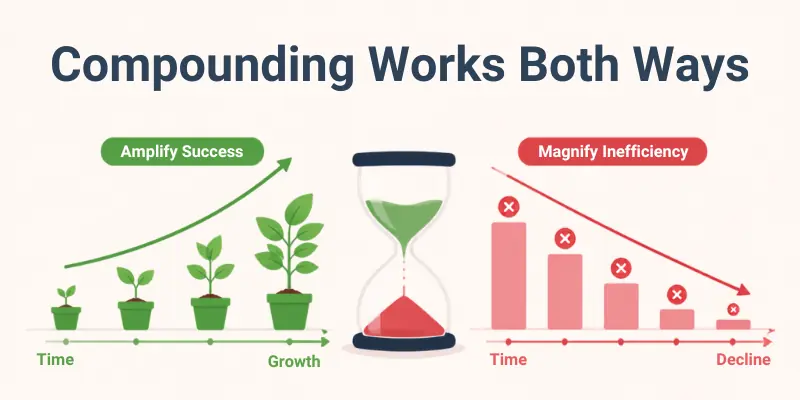
In finance, regular contributions spaced consistently over time benefit from compound growth. The same principle applies to skills, business development, and operational systems. Regular action builds cumulative advantage.
But inconsistency produces the opposite effect. Long gaps between improvements can lead to:
- Loss of competitive advantage
- Declining customer engagement
- Skill deterioration
- Reduced operational efficiency
When gaps widen, performance stagnates.
Understanding exactly how much time sits between key milestones can provide clarity, and businesses and individuals often choose to calculate how many days remain with Giga Calculator to measure precise intervals between deadlines, launches, or financial goals. Quantifying time transforms abstract delays into measurable variables.
The Deadline Effect
Performance often accelerates as deadlines approach. This psychological phenomenon shows that time pressure can sharpen focus and drive productivity.
However, overly long timeframes can create complacency. If a project has no defined endpoint, momentum fades. Clear, measurable time gaps create urgency.
For example:
- A sales team with quarterly targets performs differently than one with annual-only benchmarks.
- An athlete training with weekly performance checkpoints improves faster than one training without scheduled reviews.
- A business reviewing metrics monthly can adapt faster than one analyzing data annually.
Shorter feedback loops shrink performance gaps.
Recovery Gaps and Burnout
Not all time gaps are negative. Strategic pauses can enhance outcomes.
Recovery intervals are essential in:
- Athletic performance
- Skill acquisition
- Creative output
- Leadership decision-making
Too little space between efforts leads to burnout. Too much space erodes progress. The key lies in optimal spacing.
Elite performers often structure cycles of effort and recovery intentionally. These cycles maintain peak output over long horizons.
Performance, therefore, is not constant activity. It is structured pacing.
Strategic Timing in Business
In competitive markets, timing gaps define market share.
Entering too early can mean educating an unprepared market. Entering too late may mean fighting established competitors. The difference between market leadership and irrelevance often comes down to timing.
Time gaps influence:
- Product launch cycles
- Customer follow-up intervals
- Marketing campaign spacing
- Hiring decisions
- Investment entry and exit points
Organizations that measure and manage these intervals outperform those that rely on intuition alone.

Opportunity Cost of Delay
Every time gap carries opportunity cost.
A delayed decision may result in:
- Lost revenue
- Increased operational costs
- Competitive displacement
- Reduced compounding potential
Even a small delay can cascade. For instance, postponing investment by one year does not merely remove twelve months of growth. It eliminates the compounding potential of that year’s returns for decades.
The same applies to business strategy. A delayed innovation cycle shortens product lifespan and revenue runway.
Feedback Loops Define Growth
High-performing systems are built on tight feedback loops. The shorter the gap between action and feedback, the faster improvement occurs.
In technology development, agile methodologies thrive on short iteration cycles. In education, spaced repetition techniques optimize retention by carefully timing review intervals. In finance, dollar-cost averaging leverages consistent intervals to smooth volatility.
Performance is accelerated when feedback gaps shrink.
Measuring What Matters
Many underperformance issues stem from misjudged timelines. Teams often underestimate how long projects truly take or overestimate how much time remains before critical deadlines.
By measuring exact time intervals, clarity improves. Calculating days between milestones reveals whether progress aligns with expectations. It also allows for mid-course corrections before gaps widen beyond recovery.
Precision reduces complacency.
Long-Term Vision Versus Short-Term Gaps
Balancing long-term goals with short-term time gaps is critical. Long horizons provide direction. Short intervals provide discipline.
For example:
- A 10-year wealth goal requires monthly investment consistency.
- A five-year business expansion plan demands quarterly performance reviews.
- A three-year professional development target benefits from weekly skill-building practice.
Macro vision and micro timing must align.
Ignoring short gaps in pursuit of long goals often leads to drift. Focusing only on short gaps without a long-term objective leads to misdirected effort.
Performance thrives when both are synchronized.
Time Awareness as a Competitive Edge
High performers across industries share a common trait: awareness of time.
They:
- Track milestones precisely
- Reduce unnecessary delays
- Optimize feedback intervals
- Protect recovery periods
- Anticipate compounding effects
This awareness allows them to control pace rather than react to it.
Time is neutral. It moves forward consistently. What differentiates outcomes is how intentionally its gaps are managed.
How Time Gaps Impact Productivity in Daily Work
In real daily work environments, productivity is not only affected by how hard you work, but also by the time gaps between your tasks.
Even small delays, distractions, or pauses can break your focus and reduce your overall performance without you realizing it.
- Task switching delays: When you move from one task to another without structure, your brain needs time to reset, which reduces efficiency and slows down output
- Loss of deep focus: Frequent interruptions or long gaps between focused work sessions make it harder to enter a productive “flow state”
- Micro-delay accumulation: Small delays like checking messages, waiting for approvals, or switching tools add up and create significant productivity loss over time
- Unstructured breaks: Random or poorly timed breaks break momentum and make it harder to regain concentration afterward
- Workflow interruption effect: Gaps between steps in a process slow down entire projects, especially in team-based environments
Science Behind Time Gaps and Human Performance
From a psychological and neurological perspective, time gaps directly influence how the brain processes, stores, and retrieves information.
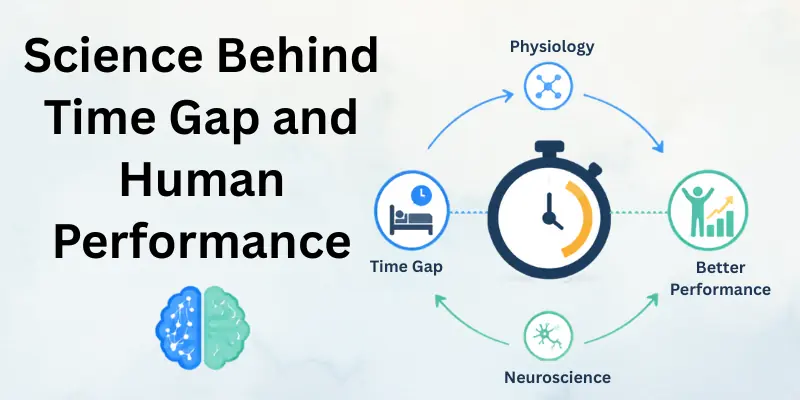
Human performance improves when tasks are spaced correctly, allowing the mind to recover and perform at a higher level consistently.
- Cognitive overload prevention: Proper time gaps help the brain avoid fatigue by giving it short recovery periods between intense tasks
- Attention cycle optimization: Humans naturally work in focus cycles, and balanced breaks improve attention span and reduce mental burnout
- Memory strengthening effect: Spaced repetition and well-timed intervals improve long-term learning and information retention
- Mental recovery enhancement: Short pauses between high-focus tasks allow the brain to reset and maintain consistent performance
- Decision clarity improvement: Adequate spacing reduces mental clutter and helps in making faster, more accurate decisions

How Businesses Can Optimize Time Intervals
In modern business environments, managing time gaps efficiently can directly improve performance, reduce operational delays, and increase profitability.
Companies that optimize timing between tasks, decisions, and workflows often outperform competitors who rely on unstructured processes.
- Workflow automation systems: Using automation tools reduces manual delays and ensures tasks move smoothly from one stage to another
- Structured time blocking: Planning work in fixed time slots helps eliminate unnecessary gaps and improves task completion speed
- Process scheduling optimization: Proper scheduling ensures that teams and systems work in sync without idle time or bottlenecks
- Real-time task tracking: Monitoring workflows in real time helps identify and remove delays before they impact performance
- Business efficiency improvement: Reducing time gaps across departments leads to faster execution, better coordination, and higher productivity overall
Conclusion
In this guide, we have covered why time gaps define performance outcomes and how small time gaps between tasks can strongly affect your productivity, business results, and decision-making. We also saw how timing, delays, and feedback speed can improve or reduce overall performance in work and life.
My simple recommendation is this: focus not only on your work, but also on the time between your work. When you reduce unnecessary delays and keep your actions consistent, your performance naturally improves.
Start applying better timing in your daily routine, work, and business tasks. Also, don’t forget to check my other blog posts for more helpful guides, and read the FAQ section to quickly understand why time gaps define performance outcomes in simple terms.
FAQs
Here are some of the most frequently asked questions related to why time gaps define performance outcomes:
Time gaps are the delays or intervals between actions, decisions, or tasks. These gaps directly affect performance outcomes because they influence speed and consistency. Better time management reduces unnecessary delays and improves results. In simple terms, smaller gaps usually lead to better productivity and performance.
Time gaps play an important role in productivity analysis because they show how efficiently work is being completed. When gaps are too long, productivity drops and tasks take more time. Proper timing improves workflow and output quality. This helps businesses measure real performance more accurately.
Performance measurement becomes more effective when time gaps are controlled and optimized properly.
- Helps track how efficiently tasks are completed
- Improves performance measurement accuracy in teams
- Identifies delays in workflow and processes
- Supports better performance tracking and decision-making
Time management reduces unnecessary delays between tasks and improves focus. It increases efficiency in both personal and business work. Good time control supports better productivity improvement and faster results. This leads to stronger performance outcomes over time.
Efficiency metrics help measure how well time is being used in a workflow. They show whether process efficiency is improving or declining. By analyzing time gaps, businesses can improve systems and reduce waste. This leads to better performance and smoother operations.
Workflow analysis studies how tasks move from start to finish and identifies delays. It improves work performance evaluation by highlighting weak points in the process. Fixing time gaps helps improve speed and accuracy. This results in better performance optimization across teams.
Time gaps can help improve productivity when they are properly managed and structured. Controlled gaps allow rest, focus, and better decision-making.
- Reduces workflow stress and burnout
- Improves focus during tasks
- Supports better performance optimization
- Enhances long-term process efficiency
Performance tracking helps monitor progress and identify gaps in work processes. It improves performance strategy by showing where improvements are needed. Businesses can reduce delays and increase output quality. This leads to better overall efficiency and growth.
- ✔ Be Respectful
- ✔ Stay Relevant
- ✔ Stay Positive
- ✔ True Feedback
- ✔ Encourage Discussion
- ❌ Avoid Spamming
- ❌ No Fake News
- ❌ Don't Copy-Paste
- ❌ No Personal Attacks