
Pros and Cons of Email Marketing: Advantages vs. Disadvantages
When I first started using email marketing, I was really excited about how easy it was to connect with people directly. The idea of sending an email and reaching so many people quickly seemed amazing!
But as I continued, I also saw that email marketing has its challenges. While it can help businesses grow and keep in touch with customers, some things can make it harder than expected.
So, guys, in this article, I’ll share what are the advantages and disadvantages of email marketing in detail.
Hopefully, you’ll get a clearer idea of how it can work for us in both positive and negative ways.
Advantages of Email Marketing
Email marketing offers a wealth of benefits that can significantly enhanceyour overall marketing strategy.
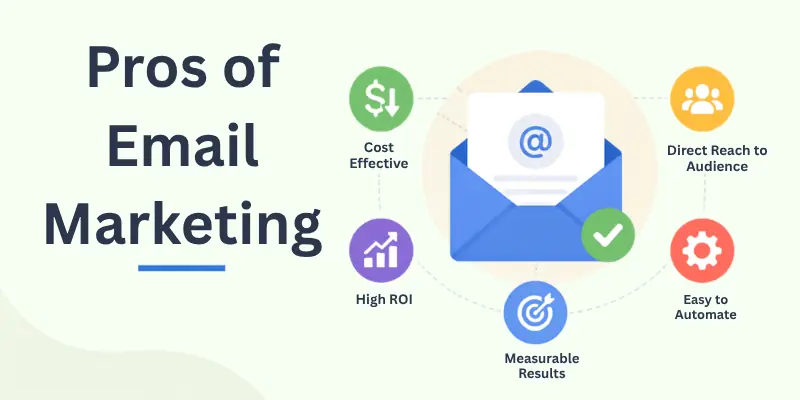
Here are some key pros of email marketing to consider:
- Low Cost
- Fast & Global Reach
- Easy to Use & Automate
- Personalization & Targeting
- High ROI
- Measurable Results
- Stronger Customer Loyalty
- Easy Sharing
- Increases Website Traffic
- Improves Brand Awareness
- Mobile-Friendly
- A/B Testing
Let us explore each in detail.
1. Low Cost
Email marketing is a cheap way to let people know about your business. Unlike regular advertising, it doesn't require printing, mailing, or costly ad space. Small businesses can send emails and connect with customers without spending a lot of money.
- No printing or mailing costs
- Affordable email tools with free plans
- Reaches thousands of people for a low price
2. Fast & Global Reach
Email marketing enables businesses to communicate with customers instantly, no matter where they are. Unlike traditional mail, which takes days to arrive, emails arrive in inboxes within seconds. This makes it simple to share updates, promotions, and news with a global audience.
- Emails are delivered instantly
- No geographic barriers—reach anyone, anywhere
- Perfect for time-sensitive offers and urgent messages
3. Easy to Use & Automate
Email marketing is simple, even for beginners. You don’t need to be a tech expert to create and send emails. With user-friendly tools, you can design emails, schedule them, and automate follow-ups without hassle.
- Drag-and-drop editors make email design easy
- Pre-made templates save time
- Automate welcome emails and follow-ups effortlessly
4. Personalization & Targeting
Email marketing lets you send the right message to the right people. Instead of sending the same email to everyone, you can customize it based on their interests, behavior, or past purchases. This makes customers feel valued and increases engagement.
- Use the recipient’s name for a personal touch
- Send product recommendations based on past purchases
- Offer special deals based on customer preferences
5. High ROI
Email marketing helps businesses earn a lot of money for every dollar they spend. Because it is focused and specific, it results in improved interaction and sales. Businesses of any size can use email marketing to increase profits without spending too much money.
- Converts leads into paying customers at a low cost
- Helps businesses scale without huge advertising expenses
- Boosts sales with personalized and timely offers
6. Measurable Results
In email marketing, you can quickly see how people respond. You can easily see if your emails are working or if they need adjustments. This helps you make data-based decisions to attract more people and increase sales.
- Track open rates to see how many people read your emails
- Measure click-through rates to know which links get the most attention
- Analyze conversions to see how many sales come from emails
7. Stronger Customer Loyalty
People enjoy feeling unique, and email marketing allows you to connect with them personally. Sending updates, offers, and helpful tips can help you build a strong connection with your audience. A loyal customer is more likely to shop with you again.
- Welcome new customers with special offers
- Send birthday discounts to make them feel valued
- Provide insider news and early access to new products

8. Easy Sharing
Email marketing allows people to easily share your content with others. They can forward your email to friends or coworkers with a single click, allowing you to reach more people with less effort.
- One-click forwarding makes sharing easy
- Helps businesses grow through word-of-mouth marketing
- Expands your audience without additional costs
9. Increases Website Traffic
Some people are more likely to check your website after getting helpful emails. Email marketing is an effective way to keep people engaged with your business and encourage them to return.
- Use personalized links to send readers to relevant pages
- Highlight limited-time offers to create urgency
- Share testimonials and reviews with links to product pages
10. Improves Brand Awareness
Every email you send is a chance to remind people of your business. People become more familiar with and trusting of your business when they see your logo and hear your voice over and over again.
- Feature your brand’s identity in every email for consistency
- Provide valuable content that reinforces your brand’s mission
- Create email campaigns that tell your brand story to connect with customers
11. Mobile-Friendly
More people are using mobile devices, and email marketing is adapting to this trend. Making your emails mobile-friendly helps ensure that your messages are clear, easy to read, and actionable for customers, no matter what device they use.
- Emails adjust to any screen size automatically
- Mobile-friendly design increases click rates
- Make your content accessible to customers anytime, anywhere

12. A/B Testing
A/B testing lets you try out different versions of your email campaigns to improve them. It's like having a tool that shows you what your audience likes, which leads to more engagement and better outcomes.
- Split your email list into groups to test variations
- Compare different email content for better engagement
- Measure the success of your tests to improve future campaigns
Disadvantages of Email Marketing
Here is a list of all the disadvantages of email marketing:
- Spam Issues
- Unsubscribes & Low Engagement
- Design & Deliverability Issues
- Time-Consuming
- Legal Rules
- High Competition
- Security Risks
- Costs for Large Lists
- Annoyance Factor
- Dependency on Email Lists
- Not Suitable for All Businesses
Let us cover all in detail.
1. Spam Issues
A major issue with email marketing is that some emails get sent to the spam folder. If your emails go to spam, customers might miss them, which can lower your chances of connecting with them and making sales.
- Spam filters can block your emails before they reach customers
- Too many promotional emails can annoy subscribers
- Unwanted emails can lead to higher unsubscribe rates
2. Unsubscribes & Low Engagement
One challenge of email marketing is that some people can unsubscribe or lose interest in your emails. If you send too many emails that aren’t useful or relevant, customers may lose interest and unsubscribe.
- Too many emails can annoy subscribers and lead to unsubscribes
- Low engagement affects email deliverability and open rates
- Customers may ignore emails if they don’t find value in them
3. Design & Deliverability Issues
Not all emails look the same on different devices and email services. If your email design doesn't work well on mobile devices or has broken images, it can make it hard for users to engage with it and can lead to a bad experience.
- Some email clients may not display images or formatting properly
- Poor mobile optimization can make emails hard to read
- Broken links or images reduce credibility and effectiveness
4. Time-Consuming
Building a successful email marketing campaign takes time. Creating content, designing templates, and analyzing results all take time and steady work to achieve good outcomes.
- Writing and designing engaging emails takes time
- Testing subject lines and formats requires extra effort
- Tracking performance and improving emails is an ongoing task
5. Legal Rules
Email marketing isn’t just about sending messages—it requires legal responsibility.
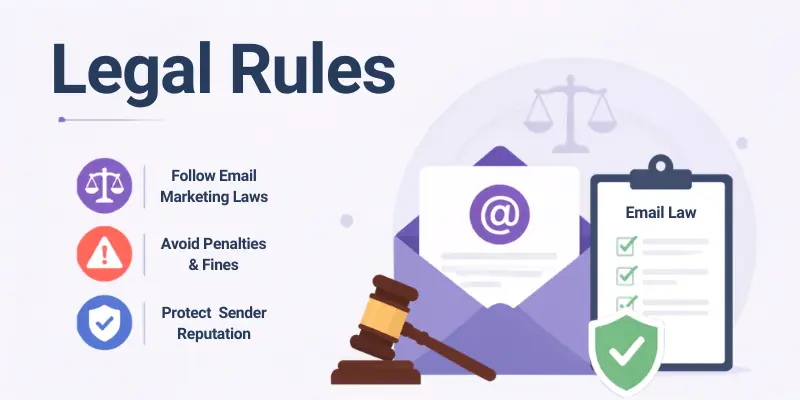
If businesses ignore email laws, they may face restrictions, penalties, or even be blacklisted from sending emails.
- Using misleading subject lines or hidden fees is illegal
- Businesses must store and handle customer data securely
- Compliance with different country laws makes global email marketing complex
6. High Competition
Every brand is competing for the same audience’s attention. If your emails are not unique or engaging enough, subscribers may choose competitors’ emails over yours.
- Many companies use email marketing, making it harder to stand out
- People quickly delete emails that don’t seem valuable
- Unique and creative strategies are required to stay competitive
7. Security Risks
Email marketing involves handling customer data, which makes it a target for hackers and phishing attacks. If security measures are weak, sensitive information can be stolen or misused.
- Customer data can be exposed to cyber threats
- Phishing scams can harm brand reputation and trust
- Weak security can lead to email account hacking
8. Costs for Large Lists
As your email list grows, managing it becomes more expensive. Many email marketing platforms charge based on the number of subscribers, making it costly for businesses with large audiences.
- More subscribers require higher-tier (paid) plans
- Sending frequent emails increases platform costs
- Advanced features like automation and segmentation add expenses
9. Annoyance Factor
Too many emails can annoy subscribers, especially if they feel overwhelmed or receive irrelevant content. If customers start feeling frustrated, they may unsubscribe or ignore your emails.
- Over-sending emails can lead to subscriber fatigue
- Irrelevant or repetitive content makes people lose interest
- Annoyed subscribers are more likely to mark emails as spam
10. Dependency on Email Lists
Email marketing depends a lot on having a high-quality list of subscribers. If your list is old or includes people who aren't interested, your campaigns won't be effective.
- Relying on old or inactive subscribers reduces campaign success
- Without new sign-ups, your list’s effectiveness fades
- Maintaining a healthy list requires time and effort
11. Not Suitable for All Businesses
Email marketing isn’t the right choice for every business. Some industries or small businesses may find it hard to build a large enough email list or engage their target audience effectively.
- Businesses with niche products may struggle to grow their email list
- Some industries (like B2B) may have more success with other marketing methods
- Smaller businesses may not have the resources to manage email marketing campaigns
Conclusion
In this article, we’ve covered the advantages and disadvantages of email marketing in detail. I believe email marketing can be a great tool for businesses to connect with customers and increase sales if done the right way. But it’s important to keep an eye on your email list and change your strategy based on what works.
If you want to learn more about email marketing, I suggest you start trying out your own campaigns and see what works best.
Feel free to share your thoughts or ask any questions in the comments below!
FAQs
Check these commonly asked questions about the advantages and disadvantages of email marketing:
Email marketing means sending emails to people to promote products or share news. Businesses use it to send offers, updates, and newsletters. It helps them stay connected with customers.
Email marketing is cheap and reaches many people fast. Businesses can send personal messages to customers. It helps increase sales and build customer trust.
Many people do not open marketing emails or mark them as spam. If emails are not interesting, people may unsubscribe. Businesses must follow the rules to avoid sending too many unwanted emails.
It helps businesses stay in touch with customers and share important updates. They can send special offers to attract more buyers. It also helps businesses understand what customers like.
Yes, if done well, email marketing can bring good results. Sending useful and interesting emails keeps customers engaged. Businesses should send the right emails to the right people.
- ✔ Be Respectful
- ✔ Stay Relevant
- ✔ Stay Positive
- ✔ True Feedback
- ✔ Encourage Discussion
- ❌ Avoid Spamming
- ❌ No Fake News
- ❌ Don't Copy-Paste
- ❌ No Personal Attacks