
Advantages and Disadvantages of Internet of Things: Pros vs. Cons
Did you know that by 2025, there will be over 75 billion IoT-connected devices globally? The Internet of Things (IoT) is revolutionizing how we live and work, connecting everything from smart homes to industrial machines. However, with these innovations come certain challenges.
In this article, we’ll explore the advantages and disadvantages of IoT to give you a complete picture of this game-changing technology.
Advantages of IoT
In this section, we will explore the bright side of Internet of Things (IoT) technology - the pros of IoT.
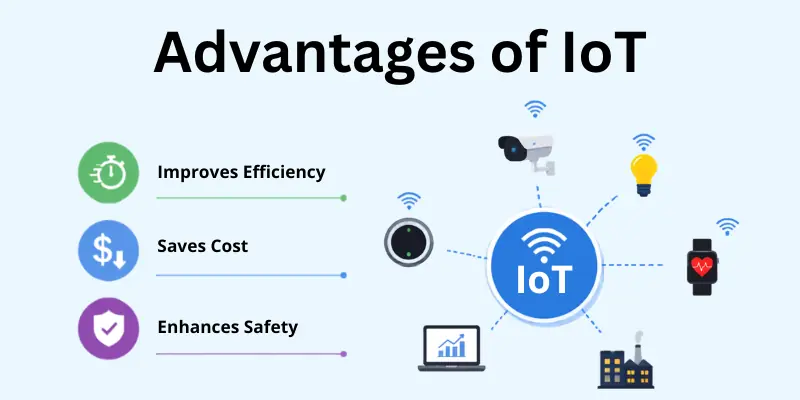
From improving efficiency to making daily life more convenient.
- Smart Automation
- Time-Saving
- Increased Efficiency
- Remote Access
- Better Resource Management
- Improved Safety
- Data Insights
- Cost Savings
- Health Monitoring
- Convenience
Let’s take a closer look at how this smart technology is transforming homes, businesses, and industries.
1. Smart Automation
Smart automation is like having a personal assistant at home. It takes care of repetitive tasks, so you don’t have to. I love how IoT handles things like locking doors or turning off appliances without me even thinking about it.
- Automates tasks like switching devices on/off based on schedules
- Sensors detect your presence and act accordingly
- Saves energy by optimizing device usage
2. Time-Saving
Time is valuable, and IoT helps us use it efficiently. We save time by handling simple, repeated tasks like turning off appliances or changing the lights. IoT acts like a superhero that saves you time!
- Removes the need to check or control devices manually
- Automates daily chores like cooking or watering plants
- Lets you stay organized with smart reminders and alerts
3. Increased Efficiency
IoT makes everything work better by improving how devices and systems perform. It makes sure that energy, time, and resources are used efficiently. It's like having a smart manager for both my home and work.
- Optimizes the use of energy and water to reduce waste
- Improves productivity by automating repetitive tasks
- Helps machines and systems run smoothly without errors
4. Remote Access
IoT enables you to control your devices from anywhere. Consider adjusting the temperature in your home while you're at work or turning off lights you've left on. It's like having my home in my pocket!
- Control smart devices with your phone or computer
- Monitor systems like security cameras from anywhere
- Make quick adjustments without being physically present
5. Better Resource Management
IoT makes efficient resource management easier. It helps to automate tasks such as turning off lights when not in use or adjusting appliances to use less energy. I feel like I'm helping to make the world a greener place!
- Identifies areas where resources are wasted
- Automatically adjusts devices to use minimal energy
- Promotes sustainable living by reducing overuse
6. Improved Safety
IoT makes life safer by monitoring things for you. These smart devices, such as security cameras and smoke detectors, protect your home and family. Personally, I feel a lot more secure knowing IoT has my back.
- Alerts you immediately about suspicious activities or dangers
- Monitors your home 24/7 with smart cameras and alarms
- Helps prevent accidents with real-time safety updates
7. Data Insights
IoT provides useful data that allows you to make better decisions. Whether it's tracking energy consumption or analyzing daily routines, it transforms raw data into useful insights. It is a personal guide that helps us to make better decisions.
- Tracks patterns in energy or resource consumption
- Analyzes habits to suggest efficiency improvements
- Helps businesses make data-driven decisions

8. Cost Savings
The Internet of Things helps save money by reducing waste and increasing efficiency. It makes life more cost-effective by lowering energy bills and avoiding unnecessary expenses. Personally, I've seen how much IoT devices can help save money over time.
- Optimizes energy use to lower electricity and heating bills
- Reduces maintenance costs with timely alerts about issues
- Saves money by preventing resource wastage
9. Health Monitoring
IoT makes it easier to manage your health. These smart devices provide real-time updates on your physical status and keep you informed—this way, I literally feel more confident in managing my health with the help of IoT.
- Helps you set and achieve fitness goals with accurate data
- Tracks health conditions over time for better treatment plans
- Connects with doctors to share health data remotely
10. Convenience
IoT simplifies life by automating tasks and providing greater control over your devices. From turning on lights to setting reminders, everything becomes easier. For me, it's like having a personal assistant wherever I go!
- Automates daily routines like scheduling and appliance control
- Lets you control multiple devices from one app or platform
- Saves time by simplifying complex tasks

Disadvantages of IoT
This section will go over the drawbacks of Internet of Things (IoT) technology.
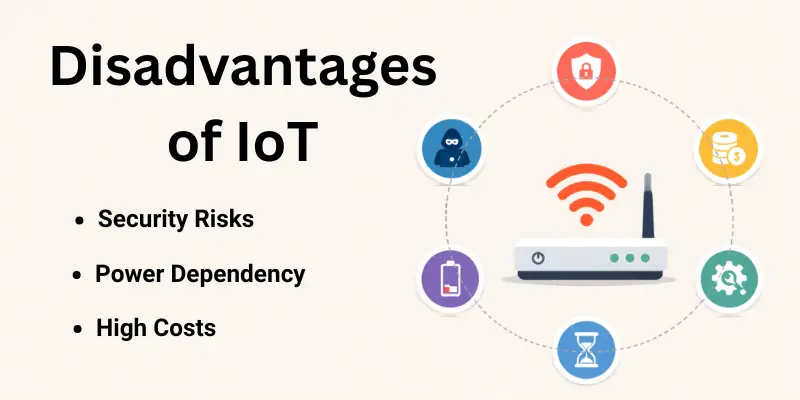
While IoT provides numerous benefits, it also brings security risks, high costs, and privacy concerns.
- Security Risks
- Privacy Concerns
- High Costs
- Complexity
- Internet Dependency
- Limited Interoperability
- Battery Life Issues
- Data Overload
- Vulnerability to System Failures
- Environmental Impact
Let us take a closer look at the potential drawbacks of this smart technology.
1. Security Risks
IoT convenience occasionally comes at the expense of security. Devices that are not adequately secured are vulnerable to cyberattacks. To lower these risks, I've started using stronger passwords and updates.
- Devices can be hijacked to steal personal or financial data
- Security flaws may expose private details to strangers
- Hackers could use IoT devices for malicious purposes
2. Privacy Concerns
IoT devices usually gather a lot of personal information, which can lead to privacy worries. It's uncomfortable to think that someone could misuse this information. Remember to read privacy policies carefully.
- Devices track personal activities, creating detailed profiles
- Companies may share or sell user data without permission
- Sensitive information could be exposed if systems are breached
3. High Costs
IoT devices can be costly to purchase and keep up. They have great features, but the initial cost and extra expenses can be a lot to handle. I always check my budget before buying these gadgets.
- Initial purchase costs for smart devices are often high
- Regular software updates or subscriptions can add extra expenses
- Repairing or replacing damaged devices can be costly
4. Complexity
Setting up and managing IoT systems can be complex. With so many devices connected, fixing problems can sometimes feel too much to handle. I believe it takes time and patience to really understand how everything works.
- Setting up devices often requires technical knowledge
- Troubleshooting problems can be time-consuming
- Managing multiple devices can feel confusing and chaotic
5. Internet Dependency
An internet connection is necessary for IoT to function. If the connection is weak or not available, these devices may not be able to work properly. A strong network is important for a good IoT experience.
- IoT devices depend on the cloud, requiring constant internet access
- Internet disruptions can cause devices to fail or reset
- Devices may not sync properly without a strong connection
6. Limited Interoperability
One problem with IoT is that different devices may not work well together. It can be annoying when devices from different brands don't work together. It means you need to pick devices that work well together.
- Devices from different brands may not communicate smoothly
- Compatibility issues can limit functionality or features
- Integration with existing systems may require extra work or tools
7. Battery Life Issues
Battery life is often a problem for IoT devices. Devices that need frequent charging or run out of battery fast can be annoying. Focus on devices that have longer battery life to prevent this issue.
- Many devices use up battery quickly due to constant connectivity
- Battery life can be reduced by frequent use or extended periods of activity
- Devices may need to be recharged or replaced more often than expected
8. Data Overload
With so many devices connected, IoT can generate a lot of data, which might be overwhelming. I sometimes find it hard to manage or process all the information. It's a reminder to filter out what's really important.
- Constant data generation can lead to information overload
- Sorting through vast amounts of data can be time-consuming
- Too much data can make it difficult to spot critical information
9. Vulnerability to System Failures
IoT devices are linked to complicated systems, and if one part breaks, it can impact the whole system. I've seen small problems lead to big issues in a system. It shows me how crucial it is to have backups ready.
- A malfunction in one device can impact the entire network
- System failures can cause disruptions in daily operations
- IoT networks may require constant monitoring to prevent breakdowns
10. Environmental Impact
I often think about how IoT affects the environment. Using raw materials and the energy these devices need can harm the environment. Make sure to choose eco-friendly options whenever you can.
- Manufacturing and disposal of devices contribute to waste
- Constant energy use can increase the carbon footprint
- E-waste from old devices may not always be recycled properly
Conclusion
Okay, everyone, it's time to finish up. This article talks about the advantages and disadvantages of IoT. IoT has great potential. It makes your life easier, helps you automate tasks, and provides smart solutions for your home or business. On the other hand, there are worries about data security, privacy, and the need for a good internet connection.
From my perspective, IoT is worth exploring if you focus on trusted devices and secure networks. If you’re curious about stepping into the world of IoT, now’s a great time to start and see how it can benefit you!
FAQs
These are the frequently asked questions about the pros and cons of IoT:
IoT means smart devices that connect to the internet and talk to each other. Examples include smart home gadgets, fitness trackers, and security cameras. These devices help make life easier by automating tasks.
IoT saves time by doing tasks automatically. It makes homes, businesses, and factories more efficient. It also helps in areas like healthcare, security, and transportation.
IoT devices can be hacked, which may put personal data at risk. They also stop working if the internet goes down. Managing too many smart devices can also be confusing.
IoT makes homes smarter with devices like smart lights, door locks, and voice assistants. It helps people stay healthy with fitness trackers and smartwatches. Factories and offices use IoT to work faster and better.
IoT is useful, but it can have security risks. Hackers can break into weak devices and steal information. To stay safe, use strong passwords and keep your devices updated.
- ✔ Be Respectful
- ✔ Stay Relevant
- ✔ Stay Positive
- ✔ True Feedback
- ✔ Encourage Discussion
- ❌ Avoid Spamming
- ❌ No Fake News
- ❌ Don't Copy-Paste
- ❌ No Personal Attacks