
What are the Advantages and Disadvantages of Internet?
Can you imagine your life without the internet? No quick Google searches, no fast messages, no online classes, no social media, and no easy way to find almost anything you need. It has become such a big part of our lives that we often do not even notice how much we depend on it.
But here is the real question: Is the internet making our lives better, or is it creating new problems for us? It can help us learn, work, earn money, stay connected, and enjoy our free time.
At the same time, it can waste our time, affect our privacy, spread false information, and create other problems.
So, guys, let’s take a closer look at the advantages and disadvantages of internet. We will explore its pros, cons, benefits, drawbacks, positive sides, and negative effects so you can clearly understand both sides of the internet.
Advantages of Internet
The internet has become a big part of our daily lives. We can use it to find information, talk to someone far away, study, shop, pay bills, find a job, or enjoy our free time.
We can also use an internet speed test to check how fast our connection is. Many tasks that once took a lot of time can now be done in just a few minutes.
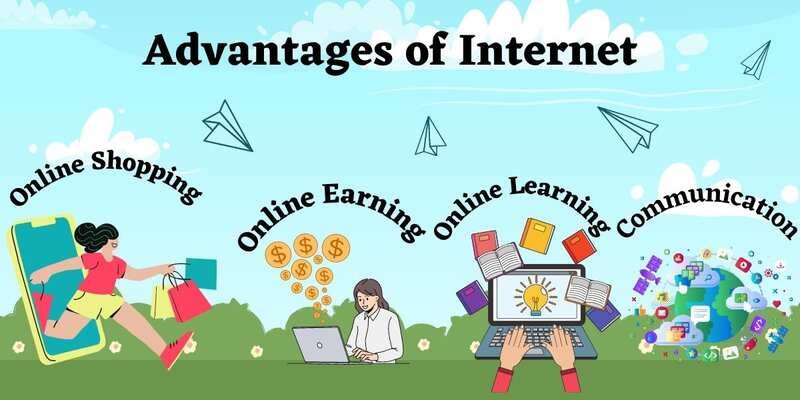
The internet is useful in many different areas of life. So let us look at its main benefits and see how each one can help us:
- Quick Information
- Global Communication
- Online Learning
- Skill Development
- News Updates
- Online Shopping
- Bill Payments
- Money Management
- Job Hunting
- Online Earning
- Remote Work
- Business Promotion
- Cloud Storage
- Digital Navigation
- Travel Booking
- Emergency Help
- Health Research
- Online Entertainment
- File Sharing
- Creative Expression
These benefits show that the internet is useful for much more than social media and videos. Now, let’s discuss each advantage of internet in detail and see how it can help us in our everyday life.
1. Quick Information
Have you ever needed an answer right now? The internet can help you find it in seconds. You can search for a place, person, product, recipe, word, or any topic that comes to your mind. We can find useful details without opening many books or asking several people.
You can use the internet to:
- Find answers to everyday questions
- Check the meaning of difficult words
- Compare different products
- Read guides and how-to articles
- Find information for school or work
The best part is that you can explore more than one source before accepting an answer. This helps you see different views and make better choices.
Instant Answers: Around 6 billion people, 74% of the world, can find the answer to almost any question in less than a second.
2. Global Communication
Imagine having a family member in another country. You can still see them, hear them, and share special moments with them through the internet. A message can reach someone far away almost instantly. You do not have to wait for a letter or travel just to have a simple conversation.
With internet communication, you can:
- Send instant messages
- Make voice and video calls
- Share photos and videos
- Join online meetings
- Stay connected with people abroad
This is also useful for businesses. A company can deal with customers, clients, and partners in different countries without being in the same room.
Deep-Sea Speed: Over 99% of international data travels through undersea cables, connecting billions across oceans at the speed of light.
3. Online Learning
What if you want to study a subject but cannot find the right teacher nearby? The internet can bring that learning to you. You can attend a class from home, watch a lesson, read an e-book, or follow a complete course without sitting inside a traditional classroom.

You can also:
- Replay difficult lessons
- Find study notes
- Practice with online exercises
- Join live classes
- Explore subjects outside your school
You are not forced to learn everything at the same speed. You can stop, repeat, and continue when you are ready. This makes online learning useful for students as well as adults.
Digital Youth: About 82% of young people aged 15–24 use the internet to study, research, and learn without borders.
4. Skill Development
A degree is not the only way to learn something useful. You can use the internet to improve a skill that you may use in real life. From cooking and photography to writing and graphic design, you can find practical material for many interests.
For example, you can:
- Practice a new language
- Learn basic coding
- Improve your writing
- Try photo editing
- Learn how to make videos
You can start with a beginner lesson and move forward when you feel ready. I can learn one small thing today and use it to create something tomorrow. With regular practice, a simple online lesson can become a useful ability.
World Classroom: Internet access jumped from 60% in 2020 to 74% in 2025, opening free skill-building tools to billions of eager learners.
5. News Updates
The internet has changed how we follow the world. You can check a major event, weather update, sports result, or business story on your mobiles without waiting for the next newspaper or TV bulletin. New information can appear on your screen while an event is still developing.
You can:
- Follow breaking stories
- Check weather warnings
- See sports results
- Follow local events
- Read news from different countries
But fast information needs careful checking. A headline can spread quickly even when the story is incomplete or wrong. We should look at the source before sharing important news.
Live Headlines: Around 6 billion users receive breaking news, weather updates, and alerts the very second they happen.
6. Online Shopping
You do not always need to visit a market to buy something. You can open an online store, look through products, check their details, and place an order from your home. This is especially helpful when a shop is far away or does not have the item you want.
Before buying, you can:
- Compare different products
- Check prices
- Read customer reviews
- Look at product photos
- Check delivery details
You also get access to products from sellers outside your local area. I can take my time before choosing instead of buying the first thing I see in a shop.
24/7 Global Mall: Over 20% of all shopping now happens online, creating a massive $6 trillion digital marketplace.
7. Bill Payments
Paying a bill can be a small task, but it can take a lot of time when you have to travel and wait in line. Internet services can remove much of that trouble. You can handle many regular payments from your phone or computer.
You may be able to:
- Pay electricity bills
- Pay phone bills
- Pay internet bills
- Check payment history
- Save digital receipts
You can do this from home instead of planning a separate trip. It is also useful when the payment center is closed and the online service is available.
Zero Queues: More than 70% of web users pay bills via digital wallets, replacing hours in line with a single tap.
8. Money Management
Knowing where your money goes can be easier when your financial information is available online. You can check your balance, review transactions, and see when money enters or leaves your account. This gives you a clearer picture of your everyday spending.
You can use online banking to:
- Check your balance
- Review transactions
- Move money between accounts
- Receive payment alerts
- Keep track of regular expenses
I can check my account without making a trip to a bank. You can also notice an unusual transaction sooner and take action if needed.
Pocket Banking: Over 75% of banked adults track spending, save, and invest straight from their phones.
9. Job Hunting
Finding work can be much wider than checking jobs in your own neighborhood. The internet lets you look through vacancies from companies in different cities and countries. You can also discover openings that may never appear on a local notice board.
You can:
- Search job vacancies
- Create an online profile
- Upload your CV
- Read job requirements
- Apply for suitable positions
This gives you more places to look before choosing where to apply. A person living in a small city can also discover an opening from a company based somewhere else.
One-Click Careers: Over 1 billion professionals connect on LinkedIn, where millions apply for their dream roles daily.
10. Online Earning
The internet is not only a place to spend money. For many people, it has also become a place to earn it. You can offer a service, sell a product, create content, or work with clients through online platforms.
Some people earn by:
- Writing articles
- Designing graphics
- Teaching online
- Editing videos
- Selling digital products
Your customer does not always need to live near you. I can provide a service from my home to someone living in another city or country. This creates earning opportunities that were much harder to reach before the internet.
Freelance Wave: More than 1.5 billion people earn money independently through digital platforms and global gigs.
11. Remote Work
Your workplace does not always have to be a physical office. If a job can be done online, the internet can allow you to work from home or another suitable place. You can receive tasks, follow online instruction, and send the finished work without sitting beside your coworkers.
Remote workers may use the internet for:
- Team meetings
- Work platforms
- Shared documents
- Project updates
- Client discussions
This can remove a daily journey for people whose jobs support remote work. A company can also hire someone who lives in another city instead of limiting its search to nearby workers.
Anywhere Office: Around 60% of knowledge workers work remotely or hybrid, saving over 50 minutes of commute time every single day.
12. Business Promotion
A business does not need a huge building to get noticed. The internet gives a small shop, new company, or independent worker a place to show what they offer. A business can put its products and services in front of people who may never pass its physical location.
A business can use the internet to:
- Show its products
- Display customer reviews
- Publish useful posts
- Build a website
- Reach new audiences
You can also learn what customers are interested in by looking at their questions and responses. This helps a business understand its audience instead of simply guessing what people want.
Global Stage: Over 70% of all ad spend is digital, allowing a solo creator or local shop to reach customers worldwide.
13. Cloud Storage
Your laptop or phone is not the only place where your digital files can live. Cloud storage lets you keep files on online servers and access them through supported services. This can be helpful when you change devices or need a file while away from your main computer.
You can store things such as:
- Photos
- Documents
- Videos
- Presentations
- Work files
Suppose your laptop is at home but you need an important file, such as one saved from datadriven.io, somewhere else. If you saved it to a cloud service, you may be able to open it from another device. It gives you more flexibility when handling your digital files.
Infinite Memory: Over 120 zettabytes of data live safely in the cloud, so your photos and files never get lost.
14. Digital Navigation
Remember the last time you went somewhere unfamiliar? Instead of stopping every few minutes to ask for directions, you can use a digital map. It can show roads, places, routes, and other useful details before and during your journey.
You can use online maps to:
- Find a new address
- Check nearby places
- Plan a route
- Find restaurants or hospitals
- Look for traffic information
This is useful when you are visiting a new area. I can check the route before leaving and get a better idea of where I am going.
Never Lost: Over 1 billion people use online maps every month for real-time traffic updates and instant turn-by-turn directions.
15. Travel Booking
Planning a trip can involve many small decisions. Where will you stay? Which flight should you take? What time does it leave? The internet puts many of these details in one place, so you can plan before you travel.
You can:
- Search for flights
- Compare hotels
- Check travel dates
- Reserve rooms
- Keep booking details online
You can make these arrangements while sitting at home. This is useful when you want to compare several choices instead of accepting the first option available.
Instant Gateways: Roughly 68% of flights and hotel stays are booked online in minutes without paper tickets.
16. Emergency Help
When something unexpected happens, finding the right information quickly can matter. The internet can help you locate nearby services, check official warnings, or find instructions during an emergency. It can also help people share important updates when normal communication is difficult.
You may use it to:
- Find a nearby hospital
- Check an official warning
- Locate emergency services
- Read safety instructions
- Find important contact numbers
The key is to use trusted sources. During a serious situation, an official government or emergency service should be trusted more than an unverified social media post.
Life-Saving Pings: Emergency disaster and SOS alerts can ping millions of smartphones simultaneously in under 5 seconds.
17. Health Research
When you have a health question, the internet can help you learn the basic information before your appointment. You can read material from hospitals, medical organizations, and other trusted health websites. This can help you understand medical words or prepare questions for a doctor.
You can search for:
- Healthy lifestyle advice
- General information about conditions
- Exercise guidance
- Medicine information
- Hospital and clinic details
You should still be careful with health information. I should not use a random website to diagnose myself. A qualified health professional is the right person to ask about a personal medical problem.
Smart Patients: About 7% of daily Google searches, “600 million queries”, are health-related, helping people find fast medical guidance.
18. Online Entertainment
Sometimes we simply want to relax. The internet gives you many ways to spend your free time without waiting for a particular TV program. You can choose what you want, when you want it.

You can enjoy:
- Movies and shows
- Music
- Online games
- Podcasts
- Videos
- Live streams
You can also discover content from countries and cultures you may never have experienced before. One search can introduce you to a new singer, creator, game, or type of entertainment.
Endless Play: People stream over 1 billion hours of video on YouTube alone every day, putting a global cinema in your hand.
19. File Sharing
Sending a digital file can be much easier than carrying it from one place to another. You can send a document, photo, presentation, or video through an online service. A file uploader makes it easy to upload files online so they can be shared with others. The other person can receive it without you needing to meet them.
This is useful when:
- A teacher needs an assignment
- A client needs a document
- A team needs a project file
- A friend wants your photos
- Several people need the same material
I can send a file while sitting at home, and they can open it from their own device. This makes digital teamwork much easier.
Frictionless Collab: Hundreds of petabytes of documents, music, and videos cross the web daily for seamless teamwork.
20. Creative Expression
The internet is also a place where people can show their imagination. You can publish something you created instead of keeping it hidden on your phone or computer. Your work may be seen by people you have never met.
You can share:
- Stories and articles
- Drawings and artwork
- Photography
- Music
- Videos
- Designs
You do not need to be famous before you start. I can create something today and share it through blogging websites today. Someone somewhere may discover it, enjoy it, or even give me an idea for my next creation.
Everyone’s a Creator: Over 3.7 million new videos drop online each day, giving every voice, artist, and thinker an instant global audience.
Disadvantages of Internet
Guys, from the advantages above, you may think that the internet only brings benefits. But sadly, that is not true. The internet also has many disadvantages that can affect our time, privacy, money, health, safety, and daily life.
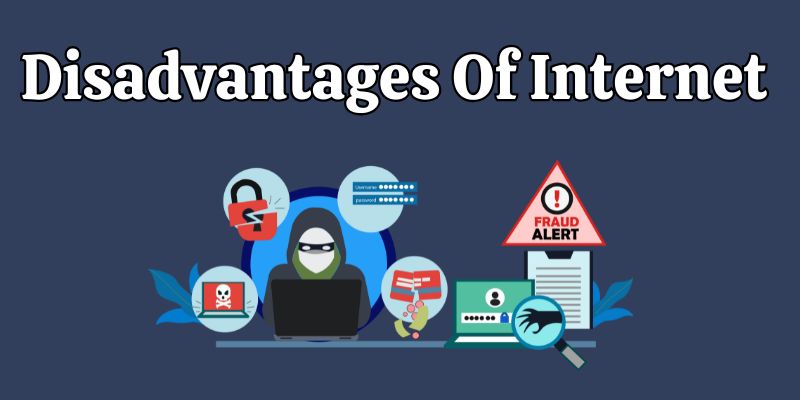
Here, I have listed 17 major disadvantages of the internet:
- Time Wasting
- False Information
- Privacy Risks
- Identity Theft
- Online Scams
- Malware Attacks
- Cyberbullying
- Online Stalking
- Screen Addiction
- Sleep Problems
- Eye Strain
- Social Isolation
- Child Safety
- Content Overload
- Digital Dependence
- Digital Distraction
- Online Reputation
Some of these problems may look small at first, but they can become serious when we ignore them. The good news is that knowing these risks can help us use the internet more carefully.
So, let us cover all these disadvantages in detail and look at some interesting facts, real statistics, and lesser-known effects of internet use.
1. Time Wasting
Have you ever opened the internet for five minutes and stayed there for an hour? This happens to many people. We may start by checking one video, post, or message and then keep looking at more and more things. Before we know it, a lot of time is gone.

You may waste time by:
- Watching endless videos
- Scrolling through social media
- Reading things you do not need
- Playing online games for too long
- Checking your phone again and again
The problem is not using the internet. The problem starts when we give it more time than we planned. I may sit down to do one useful task, but a few clicks can easily take me somewhere else.
The "Doomscroll" Drain: The average person spends roughly 6 hours and 40 minutes connected to screens daily, consuming over 40% of their waking life.
2. False Information
Not everything we read online is true. Someone can post a wrong fact, fake story, or made-up news, and thousands of people may share it. If we believe everything without checking, we can easily get the wrong idea.
False information can appear as:
- Fake news stories
- Wrong health advice
- Edited pictures
- Misleading headlines
- Made-up facts
This is why we should check the source before believing or sharing something. A popular post is not always a correct post. We need to stop, check, and think.
Virality Over Truth: MIT researchers found that fake news spreads six times faster than the truth on social networks, as fabricated headlines trigger higher emotional reactions.
3. Privacy Risks
We share a lot of information online without thinking much about it. Our name, photos, location, interests, contacts, and other details can become part of our digital life. Some websites and apps may also collect information about how we use their services.
Privacy problems can happen when:
- Personal details are shared publicly
- Apps collect too much data
- Weak passwords expose accounts
- Photos are copied without permission
- Private information reaches the wrong person
I may think a small piece of information is harmless, but several small details together can tell others a lot about me. So, we should always think before sharing.
Invisible Trackers: Over 80% of top websites run cross-site tracking scripts, building invisible digital profiles that log browsing habits, clicks, and locations without explicit user awareness.
4. Identity Theft
Imagine someone using your name or personal details as if they were you. That is one of the dangers of identity theft. Criminals may try to get information such as account details, identification numbers, or other personal data.
They may use stolen information to:
- Open accounts
- Make purchases
- Pretend to be another person
- Access online accounts
- Commit fraud
This problem can cause trouble even when the victim did nothing wrong. That is why we should protect important personal information and use strong passwords.
Over 1 Million Reports: The FTC recorded more than 1.1 million identity theft reports in 2024 through IdentityTheft.gov.
5. Online Scams
The internet makes it easy for scammers to reach people. A scam may look like a real message, job offer, prize, shopping deal, or even a message from someone you know. The goal is usually to make you give away money or personal information.

Common online scams include:
- Fake shopping websites
- Fake job offers
- Phishing messages
- Fake prizes
- Investment scams
Sometimes the message looks very real. That is what makes scams dangerous. We should never rush when someone asks for money, passwords, codes, or private information.
$2.1 Billion Lost: In 2025, people reported losing $2.1 billion to scams that started on social media, according to the FTC.
6. Malware Attacks
Your computer or phone can face another problem called malware. Malware is harmful software that can enter a device through unsafe downloads, links, files, or websites. Once inside, it may cause serious problems.
Malware can:
- Damage files
- Steal information
- Slow down a device
- Lock important data
- Give criminals access to a device
You may click one unsafe link without knowing what is behind it. That small action can create a much bigger problem. We should download files only from trusted sources and avoid suspicious links.
Automated Threats: Cybersecurity systems detect hundreds of thousands of new malicious programs and ransomware variants daily, targeting everything from personal phones to hospital servers.
7. Cyberbullying
The internet can connect people, but it can also give some people a place to hurt others. Cyberbullying means using online spaces to repeatedly insult, threaten, embarrass, or hurt someone.
It may happen through:
- Mean comments
- Hurtful messages
- Fake posts
- Sharing embarrassing pictures
- Publicly making fun of someone
The hurt does not always end when school or work ends. A person may keep receiving harmful messages even at home. This can make online spaces feel unsafe.
1 in 6: WHO/Europe found that about 15% of adolescents, or around one in six, reported experiencing cyberbullying across the 44 countries and regions studied.
8. Online Stalking
Online stalking happens when someone keeps watching, following, contacting, or tracking another person online without wanting to be contacted. It can happen through social media, messages, emails, or other online accounts.
A person may:
- Keep checking someone's profiles
- Send unwanted messages
- Follow their online activity
- Create new accounts to contact them
- Try to find private information
It can feel scary when someone keeps appearing in your online life after you have asked them to stop. We should take unwanted online contact seriously and use blocking and reporting tools when needed.
It Can Follow You Home: UNICEF notes that cyberstalking is one form of online harassment that can affect children and young people.
9. Screen Addiction
Some people find it very hard to put their phone or computer away. They may keep checking the screen even when they have other things to do. This can slowly turn normal internet use into a habit that is difficult to control.
You may notice it when you:
- Check your phone without a reason
- Feel uncomfortable when offline
- Keep using the screen after deciding to stop
- Choose the screen over other activities
- Spend more time online than planned
The internet itself is not always the problem. The problem is losing control over how much we use it. A healthy routine needs time for screens and time away from them.
Dopamine Loops: The average smartphone user unlocks their device around 90 to 100 times a day, driven by intermittent reward algorithms engineered by social platforms.
10. Sleep Problems
Late-night internet use can make it harder to follow a healthy sleep routine. You may plan to watch one video before bed and then keep watching another. Notifications and messages can also keep your attention on the phone.
Late internet use may lead to:
- Going to bed late
- Checking your phone at night
- Getting fewer hours of sleep
- Feeling tired the next day
- Having trouble following a regular sleep routine
A tired person may find it harder to study, work, or pay attention. So, putting the phone away before bedtime can be a simple but useful habit.
Melatonin Suppression: Blue light emitted by screens suppresses melatonin production by up to 50%, shifting natural circadian rhythms and delaying restorative deep sleep.
11. Eye Strain
Our eyes were not made to stare at a screen all day. When we spend long hours looking at phones, tablets, or computers, our eyes may feel tired or dry.
Long screen use can be linked with:
- Tired eyes
- Dry eyes
- Blurred vision
- Headaches
- Eye discomfort
The problem can become worse when we forget to take breaks. Looking away from the screen from time to time can give your eyes a chance to rest.
The 60% Blink Drop: Humans normally blink about 15–20 times per minute, but that rate drops by over 60% when staring at screens, triggering Computer Vision Syndrome and severe dry eyes.
12. Social Isolation
The internet helps us talk to people, but too much online time can sometimes replace real-life interaction. Someone may spend hours chatting online but very little time sitting with family or meeting friends.
This may mean:
- Less face-to-face conversation
- Fewer outdoor activities
- Less family time
- Spending more time alone
- Missing real-world social moments
Online friends can be valuable, but they should not always replace people around us. We need both digital connection and real-life connection.
Connected Yet Lonely: Despite having hundreds of virtual "friends," young adults reporting heavy social media use are twice as likely to feel socially isolated compared to low users.
13. Child Safety
Children can learn many useful things online, but they can also come across things they are not ready to see. They may meet strangers, receive harmful messages, or find violent and inappropriate content.
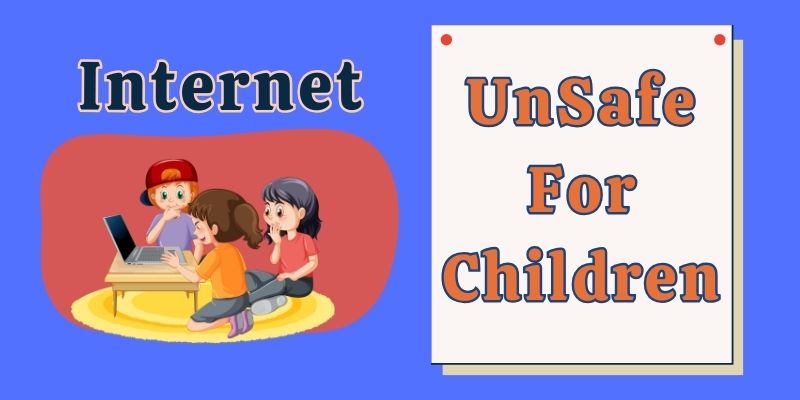
Children may face risks such as:
- Harmful videos or images
- Online bullying
- Strangers contacting them
- Privacy problems
- Online exploitation
A child may not always understand when something online is unsafe. Parents, teachers, and caregivers can help children learn what to share, who to trust, and when to ask for help.
A Child Goes Online Every Half Second: UNICEF says that around one child goes online for the first time every half second worldwide.
14. Content Overload
The internet has too much information. At first, this sounds like a good thing. But when hundreds of pages, videos, posts, and opinions appear at once, choosing what to trust can become difficult.
Content overload can happen when you:
- Open too many tabs
- Read too many opinions
- Watch endless videos
- Compare too many choices
- Keep searching without deciding
Sometimes we do not need more information. We simply need the right information. Learning to stop searching and choose reliable sources can save both time and energy.
Cognitive Burnout: The brain consumes around 34 gigabytes of media and roughly 100,000 words outside work daily, degrading memory retention and deep analytical thinking.
15. Digital Dependence
Imagine the internet suddenly stops working. Can you still do everything you normally do? Many everyday tasks now depend on online services, from communication and banking to work and shopping.
Too much dependence can cause problems when:
- The internet goes down
- A website stops working
- An online account is locked
- A service becomes unavailable
- We forget how to do something offline
The internet should make life easier, not become the only way we can manage it. Keeping some offline skills and backup options can be very useful.
A Simple Test: If losing your internet connection for a few hours stops almost everything you planned to do, you may be relying on it more than you realize.
16. Digital Distraction
A notification pops up. You check it. Then another message arrives. Soon, the work you were doing is no longer getting your full attention. This is how small online interruptions can break our focus.
Digital distractions can come from:
- Message notifications
- Social media alerts
- Pop-up messages
- New emails
- Short videos
- Online games
The biggest problem is not always the time spent on one distraction. It is the way each interruption pulls your attention away from the task in front of you.
The 23-Minute Cost: Research from UC Irvine revealed that it takes an average of 23 minutes and 15 seconds to fully refocus on a complex task after an online notification derails your focus.
17. Online Reputation
What you post online can stay around for a long time. A joke, angry comment, embarrassing picture, or careless post may later be seen by friends, teachers, employers, or other people.
Your online reputation can be affected by:
- Offensive posts
- Angry comments
- Embarrassing photos
- Fake information about you
- Old posts taken out of context
We may forget what we posted, but someone else may save it. So before posting, it is smart to ask one simple question: Would I be comfortable if this became public?
Permanent Footprints: Over 70% of employers screen candidates' social profiles, and old, forgotten posts or resurfaced comments frequently lead to job losses and career damage years later.
Pros and Cons of Internet: Comparison Table
For the quick readers here, the table overview of all the advantages and disadvantages of using the internet. The table below shows the main pros and cons of the internet in simple words:
|
Pros of Internet |
Cons of Internet |
|
Easy Access: Get useful things without going out. |
Less Privacy: Your personal details may be collected or exposed. |
|
Fast Contact: Send messages and files in moments. |
Fake Content: Some online posts can be false or misleading. |
|
Flexible Study: Study when and where you want. |
Lost Focus: Notifications can interrupt your work or study. |
|
More Choices: Compare products, services, and prices easily. |
Too Much Content: Many choices can make decisions harder. |
|
New Opportunities: Find work, clients, and business opportunities. |
Online Pressure: People may feel pressure from what they see online. |
|
Easy Collaboration: Work with people in different places. |
Technical Problems: A connection or service failure can stop your work. |
|
Digital Records: Keep receipts, documents, and other records online. |
Data Theft: Stolen information can be used against you. |
|
Quick Services: Use banking, booking, and other services from home. |
Hidden Costs: Subscriptions and online purchases can add up. |
|
Worldwide Reach: Share your work with people around the world. |
Harmful Content: You may come across content you did not want to see. |
|
Helpful Communities: Find people with similar interests or needs. |
Unwanted Contact: Strangers may message or contact you. |
Is the Internet Good or Bad?
So, after reading all these advantages and disadvantages, you may be thinking, “Is the internet actually good or bad?” The honest answer is that it depends on how we use it.
The internet can help you learn a new skill, find a job, talk to someone far away, or finish an important task in minutes. But the same internet can also waste your time, expose your personal information, or keep you scrolling when you should be sleeping.
Think about it this way. A knife can help you cut food, but you can also hurt yourself with it. The knife is not good or bad by itself. What matters is how you use it. The internet is much the same.
Before deciding whether the internet is good or bad for you, ask yourself:
- Does it help me more than it distracts me?
- Am I using it for a useful reason?
- Do I control my screen time?
- Am I careful with my personal information?
- Do I check information before believing it?
- Can I stay away from the internet when I need to?
If you can use the internet with care, it can be a very useful part of your life. The real question is not “Is the internet good or bad?” It is “How am I using it?”
How AI Is Changing Internet Use: Pros and Cons
Guys, the internet used to work in a simple way. You searched for something, opened different websites, read the information, and decided what was useful.
But now AI is changing this process.
Now, you can ask a question in normal language and get a direct answer. AI can summarize long pages, explain difficult topics, create images, translate text, write emails, and even help you compare different options.
This makes the internet easier to use. But there is a catch. When AI gives you an answer, you may not always know where the information came from or whether it is correct.
1. Faster Answers
AI can save time when you use the internet for research. Instead of opening ten pages to understand a topic, you can ask an AI tool to explain it in simple words. You can then visit trusted websites to check important details.
This is especially useful for students, writers, workers, and people who are learning something new.
New advantage: The internet is slowly moving from “search and read” to “ask, understand, and check”.
2. Less Searching
AI can reduce the amount of searching people do themselves. That sounds helpful, but it also creates a new problem. If people always accept the first AI answer, they may stop comparing different sources.
For example, an AI answer may summarize information from several sources, but you may miss an important detail that was present on the original website.
So, AI can make internet use faster while also making source checking more important.
3. Smarter Learning
The internet already gives us millions of learning resources. AI adds another layer.
You can ask AI to explain the same topic in different ways. You can ask for examples, practice questions, summaries, or a simpler explanation. A student who does not understand a lesson can keep asking questions without feeling embarrassed.
But students also need to do their own thinking. Using AI to understand a topic is different from letting AI do all the work.
4. New Fake Content
This is one of the biggest changes. The internet already had fake news and edited images. AI has made it easier to create realistic text, pictures, voices, and videos. A person may see a photo or hear a voice online and assume it is real. But AI can now create content that looks or sounds convincing.
Interesting fact: The problem is no longer only “Is this information true?” We may also need to ask, “Did this person, event, or image even exist?”
5. New Online Scams
AI is also changing online scams.
Scammers can use AI to create better-written messages, fake profiles, realistic images, and even cloned voices. This can make suspicious messages harder to recognize.
That means some old safety habits are no longer enough. Before trusting an urgent message, voice note, image, or video, verify it through another trusted method.
6. Fewer Website Visits?
Here is an interesting change that many internet users may not notice.
When AI answers a question directly, you may not need to visit a website to get the basic answer. This can save time for users. But it can also change how websites get visitors.
A website may spend hours creating useful content, while an AI system summarizes the information and gives the user an answer without that person visiting the original page.
This creates a new question for the future of the internet: If everyone gets the answer without visiting the website, who will keep creating the information?
7. AI Needs Internet
AI and the internet are becoming closely connected, but they are not the same thing. The internet connects people, websites, services, devices, and information. AI can help people understand, create, organize, and use some of that information.
Think of it this way: The internet gives you access. AI helps you interact with that access. This combination can make online work much easier, but users still need human judgment.
The New Rule
AI has not simply added another tool to the internet. It is changing how we search, read, create, learn, and make decisions online.
That gives us new advantages, but it also creates new risks. The safest approach is simple: use AI to help you, not to replace your own thinking.
Check important information. Visit original sources when needed. Be careful with personal data. And remember that something looking real online does not automatically make it real.
Surprising Facts about the Internet
Here are some surprising internet facts you may not have read before.
- The internet is now 15,798 days old, counting from January 1, 1983—the TCP/IP launch date.
- There are around 5.65 billion internet users, which is 68.7 % of the world’s population in 2025.
- China has 1.12 billion users, more than three times the internet population of the United States (~327 million).
- By 2025, there are over 18 billion IoT devices worldwide, powering smart homes, cars, and cities.
- The very first spam email was sent on May 3, 1978, by Gary Thuerk.
- Google now handles about 14–16 billion searches every day—that’s over 5 trillion searches each year.
- More than 50 % of internet traffic comes from bots, with malicious “bad bots” making up over two-thirds of that share.
- The first domain ever registered was Symbolics.com, on March 15, 1985—and it’s still online today.
- Video streaming (Netflix, YouTube, TikTok, etc.) accounts for over half of all global internet traffic.
- Every minute, people upload 500+ hours of video to YouTube—up from 72 hours a decade ago.
My Final Thoughts
In this guide, we have covered the advantages and disadvantages of the internet in detail. We looked at how the internet helps us learn, work, communicate, shop, earn money, and handle daily tasks. We also looked at the risks, from wasted time and false information to privacy problems and online scams.
After looking at both sides, one thing is clear: the internet is a tool, and the way we use it matters. You do not need to stay away from the internet. You just need to learn how to use it wisely.
Here are some simple tips I would suggest:
- Use the internet for a clear purpose.
- Take regular breaks from your screen.
- Do not believe every post you see.
- Check important information from trusted sources.
- Never share passwords or private details with strangers.
- Think twice before clicking unknown links.
- Keep your accounts protected with strong passwords.
- Make time for family, friends, sleep, and outdoor activities.
- Teach children what is safe and what is not.
- If something online feels wrong, stop and ask for help.
And before you leave, check the FAQs below to find quick answers to some common questions about the merits and demerits of the internet.
FAQs
Here are some of the most frequently asked questions related to the for and against internet:
The advantages and disadvantages of internet depend on how we use it. It can help us learn, communicate, work, and find useful services.
However, careless use can lead to privacy problems, wasted time, and online threats. The internet is a useful tool, but we should understand both its benefits and risks.
The benefits of the internet for students go beyond finding answers for homework. It gives learners access to courses, educational videos, digital books, and practice materials.
Students can also:
- Learn from teachers in other countries.
- Study at their own speed.
- Improve language and computer skills.
- Find ideas for school projects.
The important thing is to use online resources for learning instead of spending all study time on entertainment.
The pros and cons of internet for businesses depend on how a company uses online tools.
Pros:
- Reach customers in different places.
- Promote products and services.
- Communicate with team members.
- Find new work opportunities.
Cons:
- Online scams can target businesses.
- Data leaks can harm customer trust.
- Technical problems can stop work.
- Negative reviews can affect a brand.
A business should enjoy online opportunities while protecting its accounts, data, and customers.
Have you thought about why is internet important? Because it helps people complete many everyday tasks without visiting different places. We can communicate, study, apply for jobs, manage money, book services, and find directions online.
It also helps people connect with information and opportunities that may not be available nearby.
So, guys why is internet bad for some people? The problem may start when online use affects their sleep, studies, work, health, or relationships.
For example, someone may keep scrolling late at night or spend so much time online that they ignore important responsibilities. The effect depends on the type of content, the amount of time spent online, and the person's habits.
One important advantage of internet is that it allows people to work with others from different locations. A person can attend online meetings, send files, communicate with clients, and complete tasks from home.
This can help freelancers, remote workers, and businesses that work with teams in different cities or countries.
The negative effects of using internet may appear when people spend too much time sitting in front of screens or use devices late at night.
Some possible problems include:
- Tired or dry eyes
- Poor sleep habits
- Less physical activity
- Neck and back discomfort
- Difficulty taking regular breaks
The negative aspects of the internet include risks to personal privacy. Websites, apps, and other users may collect, share, or misuse information about you.
You should protect yourself by using strong passwords, checking privacy settings, avoiding unknown links, and thinking carefully before sharing personal details.
A for and against essay about internet should explain both the positive and negative sides of online use. You can follow this simple structure:
- Introduce the internet and its role in modern life.
- Explain benefits such as learning, communication, and work.
- Discuss problems such as scams, distraction, and privacy risks.
- Finish with a balanced conclusion about responsible use.
A major drawback of internet use is that people can become too dependent on online services. A weak connection or service failure may interrupt work, study, payments, or communication.
Another drawback is that online information is not always reliable. Users need backup options and should check important information before trusting it.
Is internet good or bad for children? It can be useful when children use it for learning, creativity, and age-appropriate activities. But they may also face harmful content, strangers, cyberbullying, and privacy risks.
Parents and teachers can help children by setting clear rules, explaining online safety, and encouraging them to ask for help when something feels wrong.
The pros of internet for communication include quick messages, video calls, online meetings, and easy file sharing. People can stay connected even when they live far apart.
However, online communication should not completely replace real-life conversations. Making time for family, friends, and face-to-face contact is still important.
The evils of internet use refer to harmful activities and problems that may happen online. These include cyberbullying, fraud, harmful content, identity theft, and the spread of false information.
We can reduce many risks by using trusted websites, protecting our accounts, reporting harmful behavior, and avoiding unsafe online activities.
An advantages and disadvantages of internet short paragraph should explain the main benefits and problems in just a few sentences.
You can mention that the internet helps people learn, communicate, and work. Then add that excessive use can cause distraction, privacy risks, and other problems. End by saying that careful use helps people enjoy its benefits.
A debate on internet use can show that both sides have valid points. The internet creates opportunities for education, business, communication, and entertainment, but it also brings safety, health, and privacy concerns.
The best conclusion is to focus on responsible use. We should enjoy useful online services while staying aware of their possible risks.

- ✔ Be Respectful
- ✔ Stay Relevant
- ✔ Stay Positive
- ✔ True Feedback
- ✔ Encourage Discussion
- ❌ Avoid Spamming
- ❌ No Fake News
- ❌ Don't Copy-Paste
- ❌ No Personal Attacks