
Benefits and Drawbacks of Using SEO Tools
We all know that SEO (Search Engine Optimization) organically boosts our site in terms of visibility, ranking, and, of course, traffic. And many of us, including SEO experts, use different SEO tools to measure results as part of our SEO strategy.
As an SEO expert, I often think that without SEO tools, how would we handle such a hectic and challenging task ourselves? These tools really lighten our load and give us valuable insights into many aspects of SEO.
However, different SEO tools are available, and each company's database is different, so their results can vary. Free tools provide different data compared to paid tools, and sometimes all the results conflict, which is the biggest issue with SEO tools.
So, in this guide, I’ll be covering all the major advantages and disadvantages of SEO tools in detail.
Let’s start our journey!
Advantages of SEO Tools
Guys, here are all the major benefits of search engine optimization tools that we all really get benefit from:
- Saves Time
- Improves Rankings
- Keyword Research
- Competitor Analysis
- Monitors Performance
- Boosts Content Quality
- Technical Optimization
- Backlink Insights
- User-friendly Reports
- Cost-effective for Growth
Let us cover all in great detail.
1. Saves Time
As someone who's been in the SEO game for a while, I can definitely say that SEO tools have been a game-changer when it comes to saving time. They help automate the boring tasks that would otherwise take hours or even days. By using these tools, you can focus on growing your website rather than getting stuck on the technical details.
- Get quick reports on your website's health without manually checking every page.
- Find the best keywords fast, without endless searching.
- SEO tools keep track of your rankings, saving you time from manually checking your position.
2. Improves Rankings
In my experience, using SEO tools has made a huge difference in improving rankings. These tools help identify areas for improvement and provide insights that guide your strategy. It’s like having a personal SEO coach, making sure every move counts.
- SEO tools suggest keywords and content improvements that can boost your rankings.
- Identify high-quality backlinks to strengthen your website’s authority.
- Understand what’s working for your competitors and replicate their successful strategies.
3. Keyword Research
From my experience, SEO tools make keyword research effortless. Instead of guessing what people are searching for, these tools provide real data on search trends, helping us find the best keywords to rank higher. Without them, we'd be blindly choosing words, hoping for the best.
- Helps discover keywords with high search demand to drive more traffic.
- Shows how hard or easy it is to rank for a particular keyword.
- Recommends less competitive keywords that bring in targeted traffic.

4. Competitor Analysis
From my perspective, SEO tools make spying on competitors easy (in an ethical way, of course!). Instead of guessing what works for them, these tools provide data on their keywords, backlinks, and strategies. This helps us stay ahead without wasting time on trial and error.
- Identifies the keywords your competitors are ranking for.
- Shows where they’re getting their backlinks from.
- Helps understand what’s working for them over time.
5. Monitors Performance
One of the best things about SEO tools is that they help track performance effortlessly.
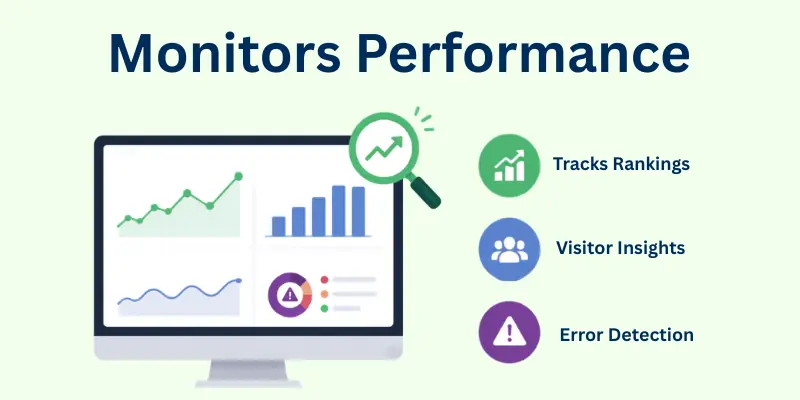
Instead of manually checking rankings and traffic, these tools provide real-time insights so we can see what’s working and what needs improvement.
- Monitors changes in search rankings over time.
- Provides insights on visitor trends and engagement.
- Detects errors that might affect performance.
6. Boosts Content Quality
SEO tools don’t just help with rankings—they also improve the quality of our content. They look at how easy it is to read, where to put keywords, and how relevant the content is to make sure it is good for readers and search engines. This means more engagement and more attention.
- Suggests improvements for clarity and structure.
- Helps place keywords naturally without stuffing.
- Identifies trending topics and content gaps.
7. Technical Optimization
SEO tools make technical optimization easier by identifying issues that affect a website’s performance. They help make the site faster, more mobile-friendly, and better organized, which leads to higher rankings and a better experience for users.
- Detects broken links, slow-loading pages, and crawl issues.
- Ensures the site is responsive on all devices.
- Helps organize URLs, sitemaps, and internal linking.
8. Backlink Insights
Backlinks are like thumbs up for your website, and SEO tools use them to find them. They make the process easy and quick because we don't have to check each site individually to see who links to it.
- Monitors who are linking to your website.
- Identifies high-quality vs. spammy backlinks.
- Helps discover potential sites for link building.
9. User-friendly Reports
Clear, well-organized data from SEO tools makes reporting easy. For a quick understanding of how well a website is doing, these tools make simple, visual reports instead of hours of analyzing raw data. Using this method saves time and makes SEO decisions much easier.
- Get clear visuals and charts for quick analysis.
- No need to manually compile data; reports are generated instantly.
- Focus on key metrics relevant to your SEO goals.

10. Cost-effective for Growth
Using SEO tools is a cheap way for a business to grow. These tools give you useful information for a lot less money than hiring big SEO teams or trying different things and seeing what works. They help everyone, even small businesses, and freelancers, do SEO better.
- Automates keyword research, site audits, and competitor analysis.
- Free and budget-friendly tools help optimize SEO without huge investments.
- Helps businesses make data-driven decisions that lead to higher organic traffic and sales.
Disadvantages of SEO Tools
This section will go over the drawbacks of SEO tools in great detail. These are all the disadvantages that I've experienced while using search engine optimization tools.
- High Costs
- Learning Curve
- Not Always Accurate
- Over-reliance
- Data Overload
- Frequent Updates Needed
- Doesn’t Guarantee Results
- Limited Free Options
- Time-consuming Setup
- Requires Expertise
Let us learn about them in detail.
1. High Costs
SEO tools can be pricey, especially for freelancers, personal bloggers, or small businesses. There are free versions, but they usually don't have as many features as paid versions, which forces people to pay for more features. It can quickly add up to buying a lot of different tools for different SEO tasks.
- Advanced features often come with high monthly or yearly fees.
- No single tool covers all SEO needs, requiring additional purchases.
- Some tools need expert knowledge or training, adding to expenses.
2. Learning Curve
SEO tools can be overwhelming, especially for beginners. They come with complex features technical jargon and require time to master. Without proper knowledge, users may struggle to get accurate insights or make the most out of the tools.
- Many tools have detailed dashboards that take time to understand.
- Users need to learn SEO basics to use the tools effectively.
- Mastering advanced features may require courses or expert guidance.
3. Not Always Accurate
While SEO tools provide valuable insights, they are not always 100% accurate. Due to variations in data sources, algorithms, and crawling methods, the information they present may sometimes be inaccurate or outdated.
- Tools might show different results for the same query.
- Data may be based on outdated information or not reflect recent changes.
- Some tools may not fully capture the complexity of a website’s SEO performance.
4. Over-reliance
SEO tools are extremely useful, but relying too heavily on them can limit creativity and prevent opportunities for a broader strategy. It's critical to balance tool-based insights with your own knowledge and techniques.
- Tools may miss the unique aspects of your content and audience.
- Over-reliance limits experimenting with new approaches.
- Relying too much on tools can lead to repetitive strategies without adapting to trends.
5. Data Overload
SEO tools provide a wealth of data, but sometimes, it can be overwhelming to sift through all the numbers. This overload of information can make it difficult to focus on the key metrics that truly matter for improving your site's performance.
- SEO tools generate large amounts of data, which can be overwhelming.
- Too much data can make it hard to decide which insights matter most.
- Focusing on small details might lead to neglecting bigger strategies.
6. Frequent Updates Needed
Because search engines are always changing, SEO tools are also always getting better.

While updates are necessary, they can sometimes cause disruptions and require time and effort to adjust to new features or changes.
- New updates can cause compatibility issues with existing settings.
- Regular updates may require you to learn new features or functions.
- Frequent updates might disrupt your workflow and delay SEO progress.
7. Doesn’t Guarantee Results
Although SEO tools offer valuable insights and recommendations, they cannot guarantee specific outcomes. Rankings and traffic depend on various factors, and using a tool doesn’t automatically lead to success.
- Competitor actions, algorithm changes, and content quality influence SEO results.
- SEO tools streamline efforts but can't speed up results.
- Success depends on your execution and adaptability, not just the tools.
8. Limited Free Options
A lot of SEO tools have free versions, but these have a lot of restrictions. You might need to pay for the full version to get access to important features for a complete SEO plan.
- Free versions often have limited access to data and advanced features.
- You may be restricted in how many queries or reports you can run per day or month.
- The free version might entice you to upgrade for better functionality, which can be costly.
9. Time-consuming Setup
Setting up SEO tools can be a time-consuming process, particularly for beginners. Configuring settings, entering data, and integrating the tool with your website all require time and effort.
- SEO tools may need multiple steps to set up, like API keys or plugin installations.
- Learning the tool’s features takes time and trial and error.
- The setup process can delay getting actionable results.
10. Requires Expertise
While SEO tools can be incredibly useful, they often require a certain level of expertise to use effectively. Without a good understanding of SEO practices, it can be challenging to make the most of these tools.
- Some SEO tools have complex features that need advanced SEO knowledge to be used effectively.
- The data can be overwhelming without the right expertise to analyze and apply it properly.
- Users need to know how to adjust SEO strategies based on tool insights to truly benefit.
Conclusion
In this article, we’ve explored the pros and cons of using search engine optimization tools in great detail.
To wrap up, I’d like to share my final thoughts with you all: SEO tools have definitely made our lives easier as SEO experts, bloggers, and freelancers. However, it’s important not to rely 100% on their results because they provide predictions. It’s fine to use predictions for guidance, but placing all your trust in them is a bad habit.
Always prioritize Google’s guidelines, as SEO tools sometimes offer insights that don’t align with what Google recommends. So, don’t panic—keep working and use optimization tools wisely.
FAQs
Here are some of the most frequently asked questions related to the advantages and disadvantages of SEO tools:
SEO tools save time by automating tasks. They help improve website rankings on search engines. These tools also provide data insights on traffic and keywords. You can analyze competitors and find new opportunities.
No, an SEO tool cannot guarantee top rankings. It only provides data and suggestions to improve SEO. Google’s algorithm considers many factors beyond tools. Consistent effort and good content are also important.
Free SEO tools offer basic features like keyword research. Paid tools give more in-depth data and advanced features. Free tools are good for beginners, but professionals need paid versions. The choice depends on your needs.
SEO tools can be expensive for small businesses. They also require time to learn and use properly. Some tools give complex data that beginners may not understand. Relying too much on tools can limit creativity.
They suggest relevant keywords based on search trends. You can see keyword difficulty and competition levels. Some tools show how often a keyword is searched. This helps in choosing the best keywords for content.
Some SEO tools analyze website speed and suggest fixes. They help identify issues like large images or slow-loading scripts. However, you need to make the changes manually. A fast website improves user experience and rankings.
Yes, SEO tools work for blogs, e-commerce sites, and business websites. However, some tools are better suited for certain website types. For example, e-commerce SEO tools focus more on product optimization. Choosing the right tool is important.
You should use SEO tools regularly to track progress. Checking keyword rankings and traffic data weekly is helpful. Some tasks, like site audits, can be done monthly. Frequent analysis helps improve SEO strategies.
No, SEO tools only assist in research and analysis. You still need to create quality content and build links manually. Google prefers natural and well-optimized websites. A combination of tools and manual work is best.
Google Search Console and Google Analytics are great free options. Ubersuggest and Ahrefs also have beginner-friendly features. They help track traffic, keywords, and website issues. Starting with simple tools makes learning easier.
- ✔ Be Respectful
- ✔ Stay Relevant
- ✔ Stay Positive
- ✔ True Feedback
- ✔ Encourage Discussion
- ❌ Avoid Spamming
- ❌ No Fake News
- ❌ Don't Copy-Paste
- ❌ No Personal Attacks