
Pros and Cons of eCommerce: Benefits vs Drawbacks
Have you ever wondered if eCommerce is really as great as it seems? While it offers easy access to products and services, it also has its own set of challenges. Is the convenience worth the potential risks?
So folks, in this article, we’ll discuss the advantages and disadvantages of eCommerce to help clear up any doubts you might have.
Without wasting any time, let's dive in!
Advantages of eCommerce
E-commerce offers numerous benefits, particularly in convenience and cost-effective marketing strategies. Below is a list of the major benefits of e-commerce:
- Open All the Time
- Sell to Anyone, Anywhere
- Saves Money
- Personalized Shopping
- Quick & Easy Buying
- Easy to Grow Business
- Track Customer Behavior
- Many Payment Options
- Automated Stock Management
- Cheaper Marketing
Let us cover all the pros of electronic commerce in detail.
1. Open All the Time
Running a physical store means following strict opening and closing hours. But with eCommerce, your store is always open—24/7. Customers can shop at any time, whether it’s early morning or late at night. This means more sales and happier customers.
- No lost sales due to closing hours
- Customers can shop anytime, even on holidays
- Earn money while you sleep
2. Sell to Anyone, Anywhere
A physical store limits you to local customers, but eCommerce removes all borders. Whether someone is across the city or on the other side of the world, they can buy from you. This opens up endless opportunities for growth.
- Reach customers worldwide without opening new stores
- Sell to people in different time zones
- Expand your business beyond your local area
3. Saves Money
Running a physical store means paying for rent, utilities, and staff. But with eCommerce, you can cut down on these extra costs. By selling online, you save money while still reaching a large audience.
- No need for expensive store rent or utilities
- Fewer staff needed to manage an online store
- Save on physical marketing materials like brochures
4. Personalized Shopping
One of the best things about eCommerce is that you can make shopping unique for each customer. They can get exactly what they want when they want it if you look at how they shop. This makes shopping more enjoyable and convenient for them.
- Suggest products based on past purchases
- Offer personalized discounts and offers
- Create targeted ads for individual preferences
5. Quick & Easy Buying
eCommerce makes shopping faster and more convenient.
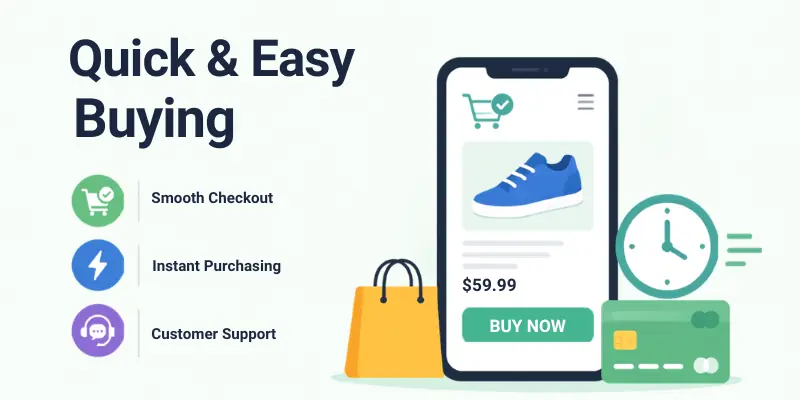
Customers can shop from their homes and buy products in just a few clicks, making it an easy experience that encourages repeat sales.
- Smooth checkout without any hassle
- Instant purchasing with just a few steps
- Quick access to customer support if needed
6. Easy to Grow Business
eCommerce helps your business grow more easily. You can offer more products, attract more customers, and enter new markets without needing physical stores. This flexibility is important for building your brand.
- Expand your product range without much cost
- Reach new markets without opening new stores
- Scale quickly with the help of online platforms

7. Track Customer Behavior
One of the biggest advantages of eCommerce is how easy it is for customers to shop. With a user-friendly website, they can quickly find what they want, make payments, and complete orders in no time.
- Fast browsing and easy navigation for customers
- Quick payment with multiple payment methods
- Instant purchase without the need to wait in line
8. Many Payment Options
With eCommerce, customers can pay in the way they like, which makes shopping easier. You can allow everyone to make a purchase by using credit cards, mobile payments, or other online methods.
- Accept mobile payments like Apple Pay or Google Pay
- Let customers pay with cryptocurrency or e-wallets
- Simplify payments with a one-click checkout process
9. Automated Stock Management
eCommerce platforms help you manage inventory more easily with automated tools. You don't need to keep track of your inventory by hand anymore. These tools can automatically update your stock levels, which saves you time and helps prevent mistakes.
- Automatically track stock levels in real-time
- Receive alerts when stock is running low
- Easily manage inventory across multiple channels
10. Cheaper Marketing
Online marketing is much cheaper than traditional methods. You can use affordable digital marketing strategies to promote your business, helping you reach potential customers while saving money.
- Use social media platforms for organic reach
- Use email marketing to engage your audience at low costs
- Drive traffic with search engine optimization (SEO)

Disadvantages of eCommerce
Here is a list of all the cons of e-commerce:
- Risk of Hacking
- Shipping Problems
- No Physical Touch
- Website Issues
- Too Many Competitors
- Difficult Returns & Refunds
- Legal & Tax Rules
- Customer Trust Issues
Let’s examine each drawback in detail.
1. Risk of Hacking
There is always a risk of hacking online. If your online store doesn't have good security, it could be targeted by cybercriminals, which could harm your business and customer trust. Keeping your site safe is important for lasting success.
- Hackers might access your payment gateway or customer details
- Data breaches could lead to lost sales and customer trust
- Investing in strong encryption and firewalls is necessary
2. Shipping Problems
Shipping problems are a common headache in eCommerce. Whether it’s slow delivery times, wrong addresses, or damaged packages, handling these issues efficiently is crucial for maintaining customer trust and satisfaction.
- Shipping delays can frustrate customers
- Damaged products during delivery can result in returns
- Incorrect shipping information can cause order mistakes
3. No Physical Touch
One drawback of online shopping is that you can't physically interact with the products. Customers can’t touch or try the products before buying, which can make them unsure or unhappy with their choice.
- Customers can't physically examine the product
- It’s harder to provide a tactile experience that builds trust
- Some buyers may worry about the quality without seeing the product
4. Website Issues
Technical issues with your eCommerce website can be a major setback. If there are problems like bugs, slow loading times, or crashes, your customers will be unhappy and might choose to go to other companies.
- A glitchy website can affect user experience
- Technical errors may lead to abandoned shopping carts
- Constant website maintenance is needed to prevent issues
5. Too Many Competitors
With eCommerce booming, there’s a lot of competition. It’s not just local stores anymore—businesses worldwide can compete for the same customers.
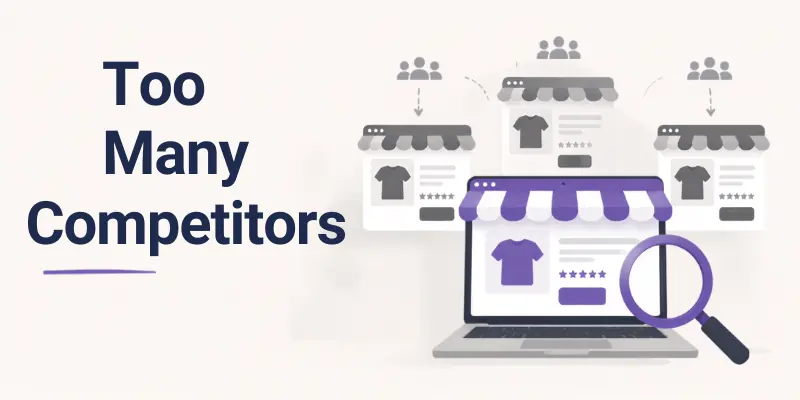
Standing out in this crowded market can be a real challenge.
- Many sellers offer similar products, making it hard to stand out
- Price wars can lead to smaller profit margins
- Your brand needs a unique selling point to attract customers
6. Difficult Returns & Refunds
In eCommerce, returns and refunds can be tricky to manage. If the process is too difficult or unclear, customers may feel frustrated and choose not to shop with you again. It’s important to make returns as simple as possible.
- Poor return processes can damage your reputation
- Handling refunds and returns can incur additional costs
- Clear and simple policies help to build customer trust
7. Legal & Tax Rules
Dealing with legal and tax rules can be tricky in eCommerce. Different regions have varying laws, and businesses need to comply with all of them, which can be time-consuming and complicated.
- Tax rules can differ between countries and states
- Legal regulations can be hard to understand and follow
- Non-compliance can lead to legal issues or fines
8. Customer Trust Issues
Trust issues are common in eCommerce, especially for new businesses. Since customers can’t see products in person, they might worry about quality, delivery, or the safety of their personal information.
- First-time shoppers might be wary of providing credit card details
- Customer reviews and testimonials play a big role in earning trust
- A secure website and clear return policies help reassure customers
Conclusion
So, guys, it’s time to wrap up. In this article, we’ve covered the pros and cons of e-commerce in detail.
Online shopping is pretty amazing! You can shop anytime you want, easily compare prices, and do it all from the comfort of your own home. Of course, there are some bumps in the road, like delivery hiccups, concerns about online security, and not being able to physically touch the products before buying.
But overall, I think e-commerce can be a fantastic way to shop as long as you take your time and stick to sites you trust. So why not dive into your favorite online store today and enjoy the convenience?
Happy shopping!
FAQs
Here’s a list of common queries people have regarding the advantages and disadvantages of e-commerce:
E-commerce means buying and selling things on the internet. People can shop using websites and mobile apps. It includes online stores, digital services, and marketplaces.
E-commerce is easy because you can shop from anywhere, anytime. Businesses can sell to more people without opening physical stores. It also offers more choices and better prices.
E-commerce needs a good internet connection to work. Customers cannot see or touch products before buying. There is also a risk of online scams and fraud.
Businesses can sell their products to more people worldwide. They can save money because they don’t need big stores. Online stores also help businesses track what customers like.
E-commerce is safe if you buy from trusted websites. Always check for secure payment options and strong passwords. Avoid sharing personal details with unknown websites.
- ✔ Be Respectful
- ✔ Stay Relevant
- ✔ Stay Positive
- ✔ True Feedback
- ✔ Encourage Discussion
- ❌ Avoid Spamming
- ❌ No Fake News
- ❌ Don't Copy-Paste
- ❌ No Personal Attacks